

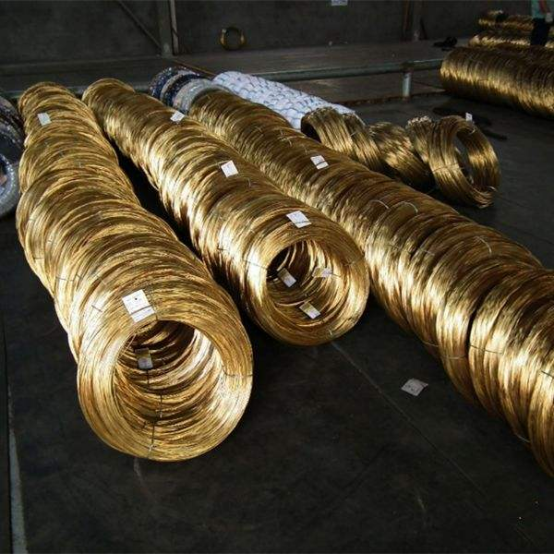
Welcome to the world of brass wire! Here, the gleaming allure of the metal perfectly blends with the practical needs of DIY enthusiasts and electronics aficionados! Jindalai Steel Group prides itself on being your trusted brass wire supplier, offering a wide selection from H62 brass wire to lead-free, environmentally friendly options. Grab your tools and let’s explore the shimmering details of brass wire together!
H62 and H65 brass wire: What are the core differences?
First, let’s answer the question everyone’s most concerned about: What’s the difference between H62 and H65 brass wire? You can think of H62 as the “good guy,” suitable for various applications; while H65 is the more powerful “elite” because of its higher copper content. This means H65 has better ductility and stronger corrosion resistance. So, if you’re making something that needs to stand the test of time (or satisfy your child’s endless curiosity), H65 might be your best choice!
The Hard vs. Soft Debate: The Dilemma of Brass Wire
You may have seen brass wire labeled “soft” and “hard,” and wondered, “What does that mean?” Well, it all depends on the wire’s stiffness! Soft brass wire is more malleable and easier to bend, making it ideal for crafting intricate DIY projects. Hard brass wire, as the name suggests, is very stiff! It’s less flexible but stronger, making it ideal for electronic components that need to maintain their shape under pressure. So, whether you’re making delicate jewelry or wiring your next large electronic device, there’s a brass wire for you!
Brass wire for electronic products and brass wire for DIY handicrafts: Are there any differences?
When it comes to electronics, you might wonder what the difference is between brass wire for electronic components and brass wire for DIY crafts. The answer is yes! Brass wire for electronic components is typically designed with conductivity as its primary focus, ensuring your electronic devices function properly. Brass wire for DIY crafts, on the other hand, prioritizes aesthetics and ease of use. Therefore, if you’re connecting circuit boards, it’s best to use electronic-grade brass wire. But if you’re creating a unique sculpture, let your creativity run wild and use craft-grade brass wire!
Electrical conductivity: What factors affect the performance of brass wire?
Now, let’s talk about conductivity. What factors affect the conductivity of brass wire? This mainly depends on the alloy composition. Generally speaking, the higher the copper content, the better the conductivity. So, if you want a wire with excellent conductivity, choose brass wire with a high copper content, such as H65 brass wire. Also, don’t forget the wire diameter—thicker wires can carry more current, while thinner wires are more suitable for delicate applications.
Welding Brass Wire: Special Precautions
Finally, if you intend to solder brass wire, there are a few points to note. Brass oxidizes easily, which can cause serious problems during soldering. Be sure to thoroughly clean the brass wire before starting to solder, and consider using solder wire with a composition compatible with the brass wire. Remember, patience is crucial! Brass has rather unique properties, so take your time and don’t rush it.
Summarize
Alright, everyone! Whether you’re looking to buy bare copper wire, lead-free copper wire, or want to understand the difference between H62 and H65, Jindalai Steel Group can meet your needs. We offer a complete range of environmentally friendly copper wire, allowing you to create, fabricate, and connect with peace of mind. Start your copper wire exploration journey now!
Post time: Nov-15-2025


