

Free-machining steels can be machined at higher cutting speeds and greater depths of cut. The addition of free-machining elements reduces the steel’s cutting resistance. Simultaneously, the properties of these elements and the compounds they form lubricate the cutting tool, facilitate chip breaking, reduce wear, and thus lower the workpiece’s surface roughness, increasing tool life and production efficiency. They are a class of materials “specifically designed for machining,” developed to meet the demands of modern industry for high-speed, precision machining.
Various Shapes of Free-Cutting Steel Bars
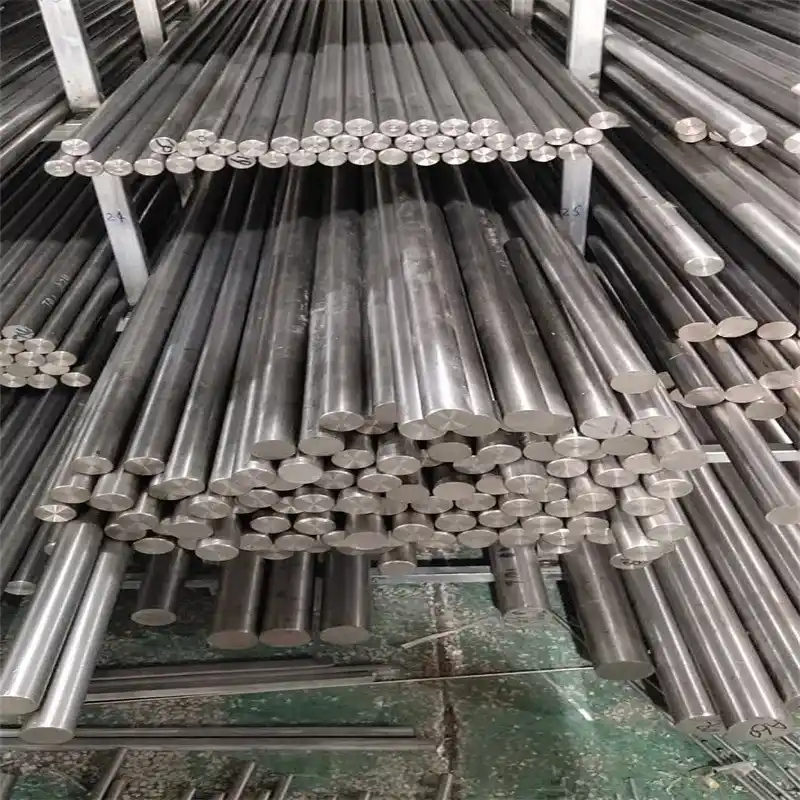
Round: Diameter Ø 1.0 ~ Ø 800, one of the most widely used free-cutting materials. Simple to process and low in cost, these cylindrical steel bars are often used in applications requiring high strength and durability. Widely used in the manufacture of various shafts, bolts, pins, and other general-purpose parts.
Square: Commonly used for parts requiring square cross-sections, such as some instrument parts, standard parts, and guide rails.
Flat Steel: Commonly used thickness 3 ~ 100mm, width 10 ~ 500mm. Usually obtained by slitting or cold drawing of steel plates, commonly used in the manufacture of sheet metal, supports, and other components requiring flat surfaces for assembly.
Hexagonal Bar: Commonly used distance between opposite sides (S) 4.0 ~ 100mm. The hexagonal shape is easy to grip and handle, making it an ideal material for producing nuts, bolts, and other fasteners. Can be directly formed without secondary processing.
Commonly Used Free-Cutting Bar Grades
Y15Pb (12L14) – Lead-based free-cutting steel (best cutting performance)
Contains lead, top-tier cutting performance: lead acts as a solid lubricant, resulting in low tool wear, smooth surface, good chip breaking, and extremely high high-speed turning efficiency. Low-carbon mild steel with good plasticity, suitable for cold heading and bending.
Mainly used in applications with relatively low stress but strict requirements for dimensions and surface finish: such as standard parts used in instruments, watches, automobiles, machine tools, and various other machines, including gears, shafts, bolts, valves, bushings, pins, pipe fittings, spring seats, machine tool lead screws, plastic molding dies, surgical and dental instruments, etc.
Y15 / 1215 – Sulfur-based environmentally friendly free-cutting steel (mainstream alternative)
Lead-free, by increasing sulfur and manganese content to form a large number of MnS inclusions, chips break very easily during cutting, improving the surface quality of parts. Accurate precision, good surface condition, can be used directly or electroplated directly after precision drawing. Commonly used in manufacturing unimportant standard parts, such as bolts, nuts, pipe fittings, and spring seats.
Y40Mn (1144) – High-sulfur medium-carbon high-strength free-cutting steel
It is a high-sulfur medium-carbon free-cutting steel with good machinability. Compared with 45 steel, it can increase tool life by four times and production efficiency by 30%. It has high strength and hardness. Commonly used in machines for screws, nuts, connecting bolts, tie rod ball bolts, oil pump drive gears, lead screws, guide rods, racks and splined shafts, watch parts, etc.
Free-machining materials, including free-machining round bars, free-machining hexagonal bars, and free-machining rods, play a vital role in modern manufacturing. Their unique properties, such as excellent machinability and versatility, make them suitable for a wide range of applications across various industries.
Jindalai Steel Group Co., Ltd. is committed to providing high-quality free-machining materials to meet the diverse needs of its customers. Whether you require standard shapes or customized solutions, our extensive range of free-machining materials can effectively improve your production efficiency and ensure the highest quality standards are met.
If you need to purchase any free-cutting products, please click to contact us for consultation. Jindalai Steel Group Co., Ltd. will provide you with the most professional answers.
Post time: Jun-22-2026


