

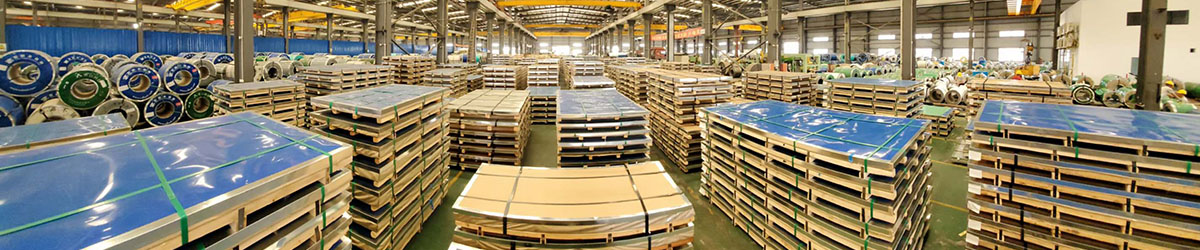
Reinforcing steel, commonly known as steel bars, plays a vital role in the construction industry. They are key materials for enhancing the tensile strength of concrete structures, ensuring their durability and stability. Jindalai Steel Group Co., Ltd. is a leading manufacturer in the steel industry, specializing in the production of high-quality reinforcing steel in various grades and specifications.
Rebar is the common term used in the engineering industry for hot-rolled ribbed steel bars. It’s generally represented by HRB. H stands for Hot-rolled, R for Ribbed, and B for Bars.
Rebar specifications are classified by diameter, commonly φ6, φ8, φ10, φ12, φ14, φ16, φ18, φ20, φ22, φ25, φ28, φ32, φ36, and φ40. φ6-φ10 rebar is shipped in coils and cut to the required length for the project; while φ12-φ40 rebar is shipped in long strips, typically 9m or 12m in length.
Rebar Material Grade.
Rebar (hot-rolled ribbed steel bar) is classified by strength grade. Currently, the mainstream standards mainly divide it into three basic grades: HRB335, HRB400, and HRB500. The core differences lie in their yield strength and chemical composition.
| Rank (old name) | Brand | Yield strength (MPa) | Main chemical components |
| Grade II steel | HRB335 | 335 | 20MnSi (20 Manganese Silicon) |
| Grade III steel | HRB400 | 400 | 20MnSiV, 20MnSiNb, 20MnTi, etc. |
| Grade IV steel | HRB500 | ≥500 | Based on HRB400, this product is optimized by adding trace elements such as V, Nb, and Ti. |
Reinforcing bars and round bars.
Reinforcing bars, commonly referred to simply as steel bars, come in various shapes, including deformed bars and plain bars. Deformed bars have a textured surface, which enhances the bond between the bar and concrete, thus improving structural integrity. Round bars, on the other hand, have a smooth surface and are primarily used in applications where the bond strength with concrete is not critical, such as in wire manufacturing or as dowels in construction.
The choice between reinforcing bars and round bars depends on the specific requirements of the project. For example, in reinforced concrete structures, deformed bars are preferred due to their superior bond properties. Jindalai Steel Group Co., Ltd. offers a wide variety of deformed and plain reinforcing bars to ensure that clients can select the appropriate type of reinforcing bar for their construction projects.
Steel Rebar Production Process.
The production process of rebar is a continuous and complex process. Its core involves processing raw materials such as iron ore through a series of physical and chemical reactions, ultimately rolling them into rebar with a threaded surface. According to mainstream processes, the production process can be summarized into four main stages: “Ironmaking → Steelmaking → Continuous Casting → Steel Rolling.” Currently, the industry widely adopts advanced continuous casting and rolling technology.
1. Ironmaking Area: Raw materials such as iron ore, coke, and limestone are fed into a blast furnace for high-temperature smelting to obtain molten pig iron.
2. Main Steelmaking Area: Molten iron from the blast furnace is fed into a converter, where impurities are removed through oxidation, and appropriate alloying elements (such as manganese and silicon) are added to produce steel with qualified composition.
3. Finishing (Rolling) Area: Molten steel is cast into billets using a continuous casting machine, and then subjected to heating, rolling, and cooling processes to finally form rebar.
Applications of Reinforcing Steel.
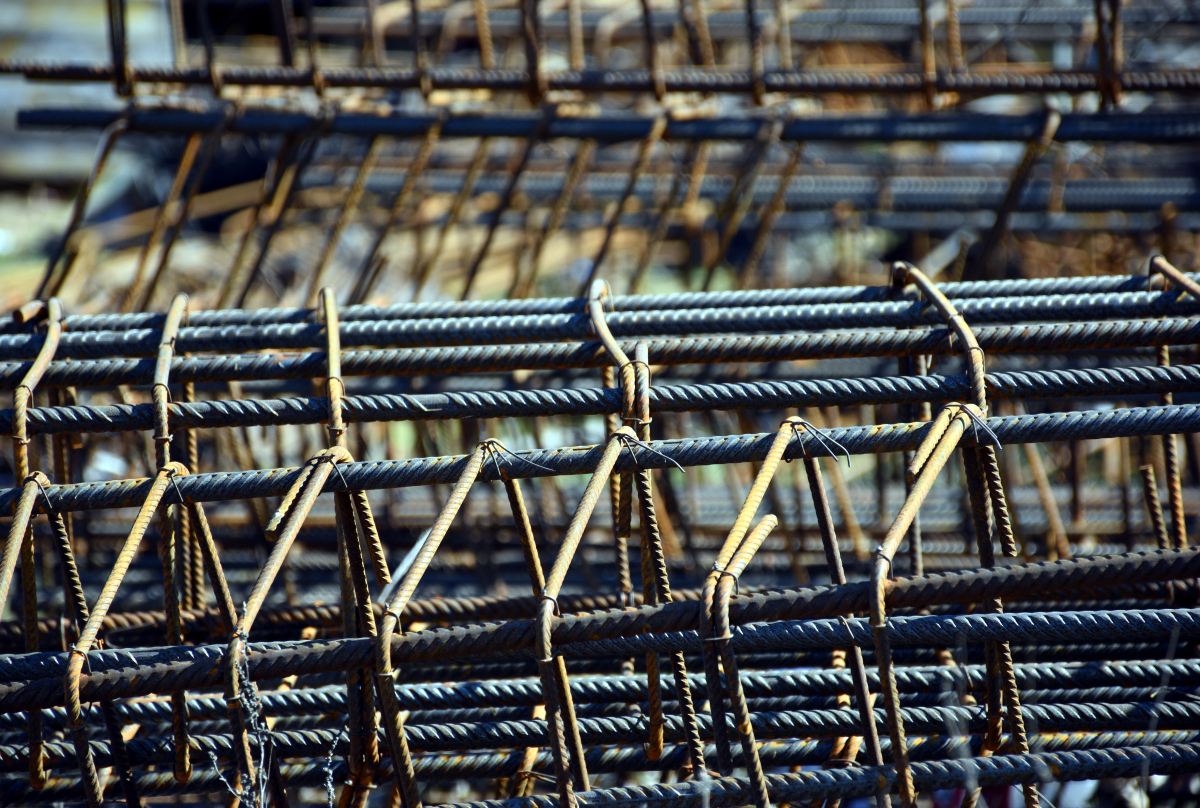
Reinforcing steel bars are the core reinforcing material in reinforced concrete structures, widely used in various civil engineering construction scenarios such as housing, bridges, roads, rail transit, and water conservancy projects. They form the “skeleton” of modern buildings, primarily bearing structural tensile stress and significantly improving the strength, durability, and overall stability of concrete.
Housing Construction: From the foundations, beams, columns, walls, and slabs of ordinary residential buildings to the main structure of high-rise buildings, reinforcing steel bars are indispensable core load-bearing materials, greatly enhancing the building’s earthquake resistance and deformation resistance.
Transportation Infrastructure: 9-meter-long reinforcing steel bars are mostly used in road construction, while 12-meter-long bars are mainly used in bridge construction. They are widely used in the reinforcement of highway and ordinary road surfaces, bridge piers, and the support structures of culverts and tunnels, exhibiting superior compressive strength compared to pure concrete pavements.
Large Public Facilities: In railway track foundations, dams, flood control dikes, and other water conservancy and transportation hub projects, reinforcing steel bars can combine with concrete to form high-load-bearing structures. For example, mega-projects like the Three Gorges Dam extensively use reinforcing steel bars to ensure overall structural strength.
Post time: Jul-08-2026


