

Welcome to the wonderful world of angle steel! If you’ve ever been confused by Q235B, Q355B, or even those high-grade stainless steel angle steels, you’re not alone. Jindalai Steel Group Co., Ltd. will explain the knowledge of various angle steels to you one by one.
Q235B vs. Q355B: Steel Showdown
First, let’s look at two heavyweight angle steels: Q235B and Q355B. What’s the difference between them? Q235B is a reliable and durable angle steel, ideal for general construction and light load-bearing applications. But if you need greater strength, Q355B is the ideal choice. It has a higher yield strength, making it ideal for heavy-duty frames and equipment racks. Therefore, if you are building skyscrapers or robust equipment racks, Q355B will be your best option.
Equal Sides and Unequal Sides: The Dilemma of Angle Steel
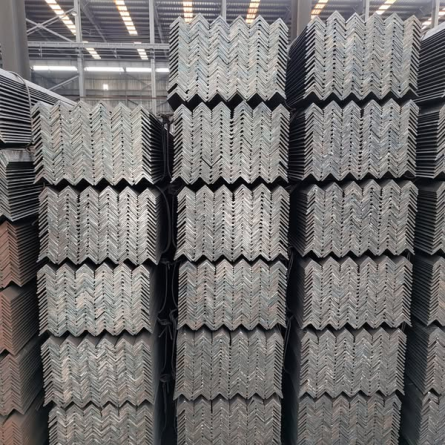
Now, let’s talk about equal-sided angle steel and non-equal-sided angle steel. Equal-sided angle steel is like a reliable friend, always there when needed—perfect for shelving and railings requiring uniformity. Non-equal-sided angle steel, on the other hand, is ideal for handling uneven stress conditions. It’s like a friend who can handle unexpected situations—perfect for curtain wall framing or any project requiring additional support on one side.
Galvanized steel sheet: hot-dip galvanizing and cold-dip galvanizing
When it comes to rust prevention, there are two main options: hot-dip galvanizing and cold-dip galvanizing of angle steel. Hot-dip galvanizing is considered a superhero in the world of rust prevention, offering a longer service life and is especially suitable for outdoor projects such as railings and port supports. While cold-dip galvanizing is also effective, its performance is slightly less so. If you’re looking for the best value, hot-dip galvanizing is the optimal choice, especially if you want your project to last longer than your last relationship!
Stainless steel: the champion of corrosion resistance
Now, let’s talk about stainless steel angle bars (304/316L). These are top-notch in corrosion resistance, making them especially suitable for chemical industrial parks and humid environments. Compared to regular carbon steel angle bars, they’re like the difference between wearing a raincoat and a T-shirt in a downpour. Yes, they’re more expensive, but in terms of lifespan and performance, they’re absolutely worth the price.
Choosing the right size: Both width and thickness are important.
When choosing angle steel, dimensions are crucial! Side width (30mm-200mm) and wall thickness (3mm-20mm) directly affect load-bearing capacity and span. For a 5-meter span support, you need to choose a width that can easily withstand the load. Don’t skimp on this – your project’s success depends on it!
Weathering steel: A durable choice
Finally, don’t forget weathering steel angle bars. Compared to Q235B steel, they offer a significantly longer service life for outdoor rust protection. And guess what? You might not even need additional anti-corrosion paint. This is truly the low-maintenance option!
Perforated Angle Steel: Customizable Options
If you’re looking for something unique, perforated angle steel is the perfect choice. It’s ideal for making shelves and solar panels, and the hole spacing and diameter can be customized to your needs. Therefore, whether you’re building solar panel supports or creating stylish shelves, perforated angle steel can meet your requirements.
In short, whether you’re choosing between Q235B and Q355B, equal-sided and unequal-sided angle steel, or galvanized steel and stainless steel, Jindalai Steel Group Co., Ltd. can provide guidance based on its expertise. Remember, the right angle steel is crucial to the success of your project. Therefore, choose carefully to ensure your steel is strong and durable, and your project is stable and reliable!
Post time: Jan-30-2026


