

Understanding Brass Hexagonal Bars
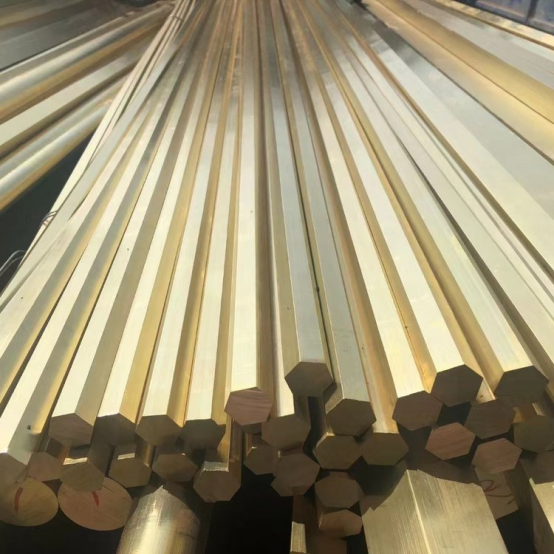
Brass hexagonal bars are a unique form of metal stock characterized by their six-sided cross-section. Unlike traditional round or square bars, the hexagonal shape offers distinct advantages in various engineering applications. The geometry of a brass hexagonal bar allows for better grip and torque when fastening, making it an ideal choice for components that require secure connections. Additionally, the hexagonal profile facilitates efficient space utilization in assemblies, providing a compact solution without compromising strength or durability.
Engineering Advantages of Hexagonal Cross-Sections
The hexagonal cross-section of brass bars presents irreplaceable engineering advantages. This shape not only enhances the mechanical interlocking of components but also improves the distribution of stress across the material. As a result, brass hexagonal bars exhibit superior resistance to deformation under load compared to their round or square counterparts. Furthermore, the increased surface area of the hexagonal profile allows for better adhesion in applications requiring coatings or bonding, making them a preferred choice in industries such as automotive and aerospace.
Composition and Performance Variations
When it comes to brass hexagonal bars, the composition plays a crucial role in determining performance and cost. Different grades, such as H59, H62, H65, H68, C3604, and HPb59-1, offer varying levels of strength, corrosion resistance, and machinability. For instance, H59 is known for its excellent machinability, while H68 provides enhanced strength. Understanding these differences is essential for engineers and manufacturers to select the appropriate grade for their specific applications, balancing performance requirements with budget constraints.
Production Processes: Extrusion vs. Drawing
The production of brass hexagonal bars typically involves two primary processes: extrusion and drawing. Extrusion is a method where heated brass is forced through a die to create the desired shape, resulting in a product with good dimensional accuracy and surface finish. On the other hand, cold drawing involves pulling the brass through a die at room temperature, which enhances the mechanical properties and surface quality of the final product. While extrusion is generally faster and more cost-effective, cold drawing offers superior dimensional precision and reduced internal residual stress, making it ideal for high-performance applications.
Conclusion: The Jindalai Steel Group Advantage
At Jindalai Steel Group Co., Ltd., we pride ourselves on our commitment to quality and innovation in the production of brass hexagonal bars. Our extensive range of products, including free-cutting brass hexagonal bars, is designed to meet the diverse needs of our clients across various industries. By understanding the unique properties and advantages of brass hexagonal bars, we empower engineers and manufacturers to make informed decisions that enhance their projects’ efficiency and effectiveness. Choose Jindalai Steel Group for your brass hexagonal bar needs and experience the difference in quality and performance.
Post time: Mar-03-2026


