

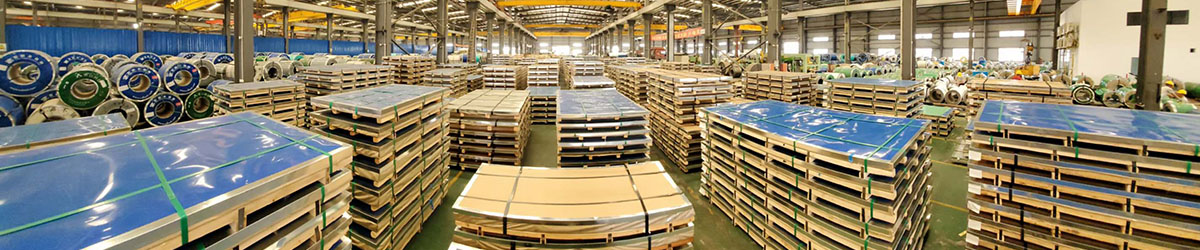
Brass sheet is a commonly used copper-processed sheet material based on copper-zinc alloy. Brass is divided into two main categories: ordinary brass and special brass. Ordinary brass is a binary alloy composed only of copper and zinc, while special brass has additional elements such as silicon, aluminum, tin, and lead added. It has good mechanical properties, processing performance, and corrosion resistance, and is widely used in industrial manufacturing and civilian fields.
The most common international brass plate grades include:
| Brand | Copper content (approximately) | Features | Main applications |
| H59 | 59% | High hardness and good plasticity under hot conditions | Various stressed parts subjected to deep drawing and bending, such as pins, rivets, washers, nuts, etc. |
| H62 | 62% | It has wide applications, good mechanical properties, excellent plasticity in both cold and hot states, good machinability, and is inexpensive. However, it is prone to corrosion cracking. | Deep-drawn and bent parts, such as pins, rivets, washers, radiator parts, and small hardware. |
| H65 | 65% | It has a good balance between strength and plasticity and good processing performance. | Small hardware, daily necessities, small springs, screws, mechanical parts, building frames, car water tanks, etc. |
| H68 | 68% | It has excellent plasticity and superior processing and welding properties. | Complex cold-stamped and deep-drawn parts, such as radiator housings, conduits, bellows, cartridge cases, gaskets, etc. |
| H70 | 70% | Good plasticity and cold and hot working properties | Radiator housing, bellows, cartridge case |
| H80 | 80% | It has high strength, good plasticity, and high corrosion resistance in air, fresh water, and seawater. | Thin-walled tubes, corrugated tubes, papermaking mesh, building materials, electronics, instruments, medical devices, etc. |
| H85 | 85% | It has high strength, good plasticity, and can withstand cold and hot pressure processing well. It is also corrosion resistant. | Condensation and heat dissipation pipes, siphon pipes, serpentine pipes, and cooling equipment components. |
| H90 | 90% | It has good electrical and thermal conductivity and is not prone to stress cracking. | Water supply and drainage pipes, medals, artwork, water tank belts. |
| H96 | 96% | Excellent electrical conductivity and corrosion resistance, good plasticity | Pipes, condenser tubes, radiator tubes, radiator fins, automotive radiator belts, and conductive parts. |
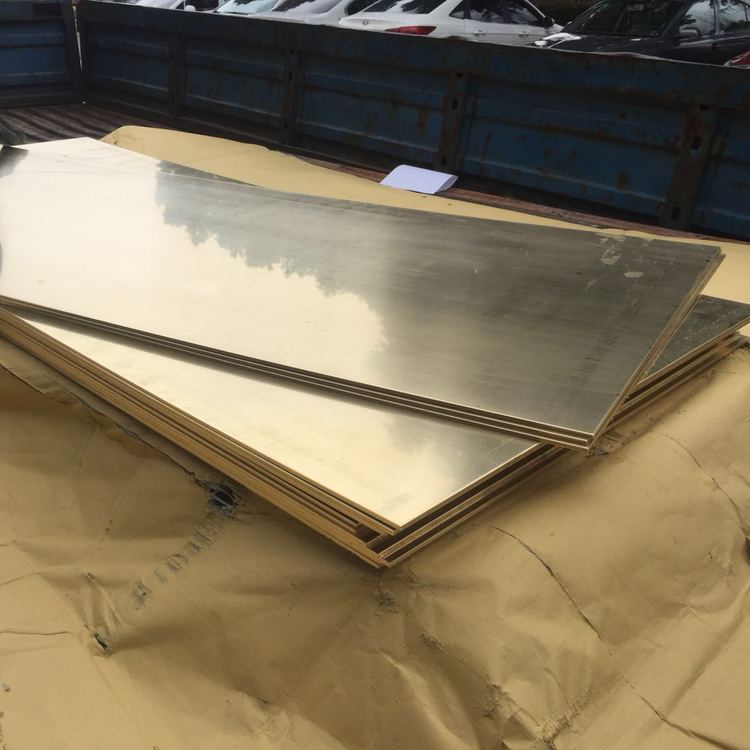
The manufacturing process of brass sheet metal includes the following key steps:
1. Melting: This process first melts two raw materials—copper and zinc—in a furnace. The ratio of the two metals is strictly controlled to achieve the required purity.
2. Casting: After the alloy is melted, it is cast into ingots. These ingots are then cooled and solidified, ready for casting.
3. Hot Rolling: The solidified steel ingots are heated and rolled through rolls to reduce their thickness, forming sheet metal. This process also improves the mechanical properties of the material.
4. Cold Rolling: The hot-rolled steel sheet can be cold-rolled to obtain a smoother surface and tighter tolerances.
5. Annealing: The sheet metal is then annealed, a heat treatment process that eliminates internal stress and improves ductility.
6. Finishing: Finally, the brass sheet metal is cut to the required dimensions, polished, and undergoes quality inspection before packaging and shipping.
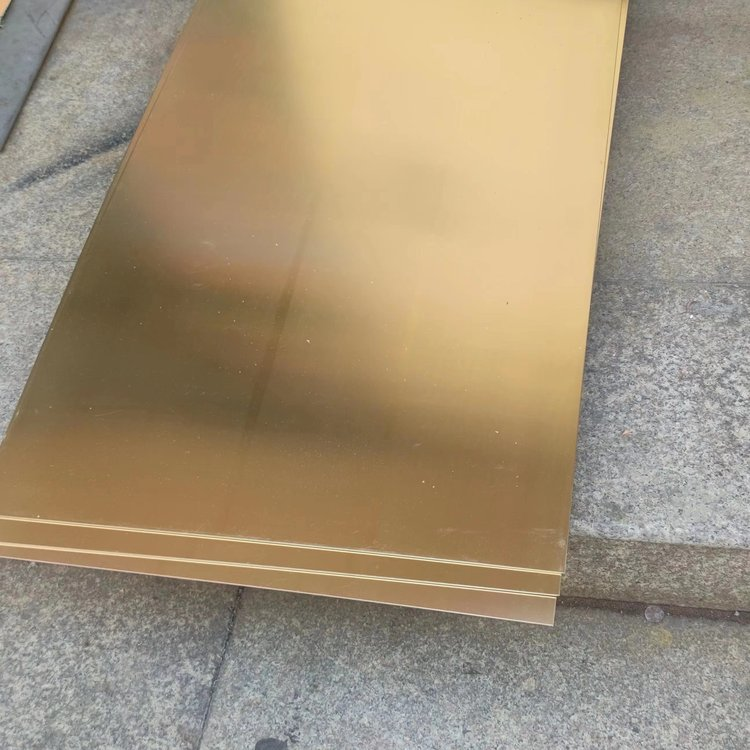
The essential difference between brass and copper sheets lies in their purity: copper is industrially pure copper with extremely high purity, while brass is a copper-zinc alloy.
The core differences lie in their composition, performance, and application scenarios, which can be compared from the following dimensions:
| Comparison Dimensions | copper plate | brass plate |
| Essence and Components | Industrial pure copper. Extremely high copper content, exceeding 99.9%. | Copper-zinc alloy. The copper content is typically between 59% and 68%, with zinc being the main element, and sometimes lead is also present. |
| Exterior color | Purple-red or rose-red, with a glossy finish | It is generally a uniform golden yellow with a strong luster, and the color can be adjusted from red to yellow depending on the zinc content. |
| density | Relatively large, approximately 8.9-8.95 g/cm³ | It is relatively small, approximately 8.52-8.62 g/cm³. |
Understanding the various grades of brass sheet, their applications, and manufacturing processes is crucial for metalworking decisions. If you require brass sheet or other steel products, please feel free to contact us. We have the expertise and resources to provide high-quality products tailored to your specifications.
Post time: Aug-28-2026


