

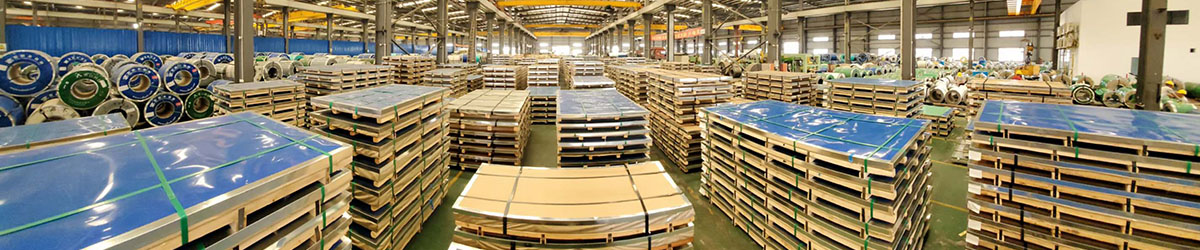
Brass round bars, especially those produced from the HPb59-1 alloy, are widely recognised for their machinability and versatility. As a manufacturer in this sector, Jindalai Steel Group Limited supplies brass bars to customers whose requirements differ considerably from one order to the next. Machinability alone, however, is not enough to justify a material choice. What matters just as much is knowing where a leaded brass bar performs well, where it should not be used at all, and which trade-offs follow from the temper and hardness that are specified.
This article sets out those boundaries in a form that can be used directly at the specification stage: the character of HPb59-1, the applications it should be kept away from, the relationship between hardness and performance, and the parts for which another material is the better answer.
1 Characteristics of HPb59-1 Brass
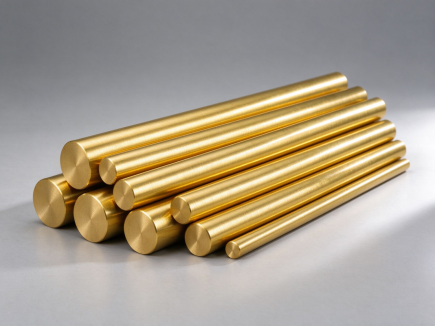
HPb59-1 is a leaded brass with a nominal composition of about 59% copper, 39% zinc and 2% lead. Copper gives the alloy its conductivity and corrosion resistance, zinc supplies strength and lowers cost, and lead remains dispersed as fine particles that act as chip breakers during cutting. The practical result is a free-machining alloy that can be turned, drilled, milled and threaded at high speed while holding tight tolerances and a clean surface finish.
The same lead content that makes the alloy easy to cut is also the property that limits it. Where the material is exposed to drinking water or to food, lead can migrate into the medium being handled, and the alloy then falls outside the material rules that apply to those products. This is a specification question rather than a performance question: the bar machines well, but it is not permitted in that service.
Table 1 summarises the composition and the properties that drive selection.
Table 1 Typical composition and selection-relevant characteristics of HPb59-1 brass
|
Property |
Typical value or description |
Selection implication |
|
Copper (Cu) |
Approximately 59% | Conductivity and corrosion resistance |
|
Zinc (Zn) |
Approximately 39% | Strength at moderate cost |
|
Lead (Pb) |
Approximately 2%, finely dispersed | Free-cutting behaviour; restricts water and food contact |
|
Alloy type |
Leaded brass | Best suited to machined parts, not to forming-intensive parts |
|
Machinability |
Excellent; high cutting speeds, good chip control | Complex geometries and tight tolerances are practical |
|
Surface finish |
Bright drawn, fine longitudinal texture | Good as-supplied appearance; finishes well |
|
Typical supply form |
Solid round bar in straight lengths | Suited to automatic and CNC turning |
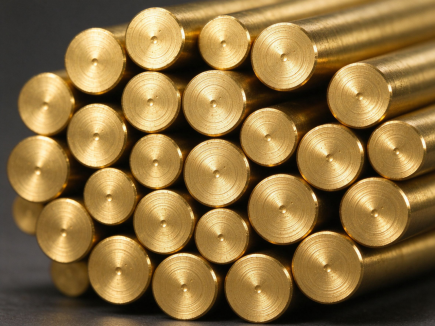
The cross-section of a drawn bar is shown in Figure 2. Concentric turning marks and a consistent wall thickness across the section are the practical signs of a homogeneous, free-cutting bar that will hold dimension through a long production run.
2 When HPb59-1 Brass Should Not Be Used
HPb59-1 brass round bars perform excellently in many applications, but their use should be avoided in a number of specific situations. In each case the deciding factor is the lead content and the way the part is exposed to the medium it handles, rather than mechanical strength.
Drinking water systems are the clearest case. Lead can leach from the alloy into standing water, and the resulting concentration may exceed the limits set for materials in contact with drinking water. Before any brass is approved for potable service, the alloy should be checked against the local rules on lead content and against the applicable product standard, and low-lead or lead-free grades should be considered instead.
Food contact is treated in a similar way. Because of the risk of lead migration, HPb59-1 is not suitable for kitchen utensils, tableware, or surfaces and equipment that come into direct contact with food during processing.
High-temperature service is a third limitation. Brass is generally corrosion resistant, but HPb59-1 does not hold its properties well when the service temperature rises; lead can weaken the material and the part may lose the strength or dimensional stability the design assumed. Components that see sustained or cyclic high temperature should be made from an alloy specified for that duty.
Table 2 sets out these restrictions and the action to take in each case.
Table 2 Applications where HPb59-1 brass should be avoided
|
Application |
Why the alloy is unsuitable |
Recommended action |
|
Drinking water supply piping and potable fittings |
Lead can leach into standing water and may exceed permitted limits | Verify compliance with local lead-content rules; specify a low-lead or lead-free brass |
|
Food contact surfaces, utensils, tableware, food processing equipment |
Direct contact creates a lead migration risk | Use a food-contact approved material; do not substitute HPb59-1 |
|
Sustained or cyclic high-temperature components |
Lead weakens the alloy and properties degrade with temperature | Specify an alloy rated for the service temperature |
3 Is Harder Brass Always Better?
The hardness of a brass rod affects how it behaves in service and on the machine, but a harder bar is not automatically a better one. The right choice depends on what the part has to do and how it will be produced, and the three considerations below usually pull in different directions.
Machinability favours the softer condition. Softer brass cuts more easily, produces lower cutting forces and less tool wear, and is the practical choice for complex parts that must hold precision over long runs. Harder material is more difficult to cut and shape, and the extra tool wear and reduced cutting speed show up as higher production cost.
Durability favours hardness only up to a point. A harder bar offers greater wear resistance, but it is also less ductile and more brittle. Where the part must absorb impact, tolerate misalignment or be formed after machining, the softer temper is more forgiving.
Corrosion resistance does not follow hardness at all. It is governed by alloy composition, surface condition and any coating or treatment applied, so specifying a harder temper will not by itself improve the life of a part in a corrosive environment.
Table 3 compares the two conditions against the criteria that usually decide the question.
Table 3 Softer versus harder temper: what each condition is good for
|
Consideration |
Softer temper |
Harder temper |
|
Machinability |
Easier cutting, lower tool wear, better for complex parts | More difficult to cut; higher tool wear and cost |
|
Wear resistance |
Lower; not first choice for sliding contact | Higher; preferred for bushes, bearings and wear faces |
|
Ductility and impact |
Better tolerance of impact and forming | More brittle; less tolerant of impact and misalignment |
|
Dimensional stability |
Adequate when cutting loads are light | Better retention of finish dimensions under load |
|
Typical use |
Intricate machined parts, long production runs | Wear parts and load-bearing contact surfaces |
|
Corrosion resistance |
Set by composition and surface treatment, not by hardness | Unchanged by hardness; still set by composition and treatment |
4 Typical Applications of Brass Round Bars
When the service conditions fall inside the limits described above, HPb59-1 brass round bars are an efficient material for machined components. Table 4 lists the main application groups and the property each one relies on.
Fittings and connectors are the largest group. Round bar is turned into nipples, adapters, valve bodies and HVAC fittings, where free-cutting behaviour allows precise threads and reliable sealing. Automotive components such as bushings, bearings and fasteners draw on the strength and wear resistance of the alloy. Electrical connectors and terminals use its conductivity, and decorative hardware takes advantage of the way brass polishes and holds a bright finish.
Figure 3 shows the same bar stock alongside finished machined parts, which is the usual way a bar order is judged: not as raw material, but as the input to a family of components.
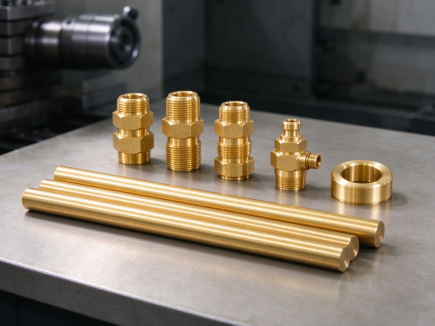
Table 4 Main applications of brass round bars and the property each relies on
|
Application |
What the brass contributes |
Point to watch |
|
Fittings, connectors, valves (non-potable service) |
Free cutting, accurate threads, reliable sealing | Exclude drinking water and food contact |
|
Automotive bushings, bearings, fasteners |
Strength and wear resistance at moderate cost | Confirm the temper suits the wear duty |
|
Electrical connectors and terminals |
Good conductivity and machinability | Confirm the required conductivity grade |
|
Decorative hardware, fixtures, artwork |
Polishes to a bright finish and holds colour | Specify a clear protective finish for outdoor use |
5 Parts Not Suitable for Brass Round Bars
Brass round bars have many uses, but some parts should not be made from them. The limits are mechanical or environmental rather than machinability related, and the answer is usually a different material rather than a different temper.
High-pressure components are the first case. In hydraulic systems and similar duties, brass may not provide the strength and fatigue durability required, and stainless steel or a high-strength alloy is normally specified instead. Marine service is the second: brass corrodes readily in seawater, so components for that environment should use a bronze or a material with a suitable protective system. High-temperature components are the third, for the reasons already given in Section 2.
Table 5 summarises these exclusions together with the alternative normally adopted.
Table 5 Parts for which brass round bar is not the right choice
|
Part or duty |
Limitation of brass |
Preferred alternative |
|
High-pressure hydraulic components |
Insufficient strength and fatigue durability | Stainless steel or a high-strength alloy |
|
Marine and seawater-exposed parts |
Readily corrodes in seawater | Bronze, or a material with a proven protective system |
|
High-temperature components |
Lead weakens the alloy; properties degrade | An alloy rated for the service temperature |
|
Drinking-water and food-contact parts |
Lead migration risk | Low-lead or lead-free, food-contact approved material |
6 Conclusion
Brass round bars, including those supplied by Jindalai Steel Group, offer clear advantages: they machine easily, hold tolerance, finish well and suit a wide range of turned components. Those advantages are conditional, however, and the conditions are set by the lead content of HPb59-1 and by the mechanical limits of the alloy.
A sound selection therefore starts with the application rather than the material. Where the part handles drinking water or food, the alloy should be checked against the applicable rules and a compliant grade chosen. Where the part must survive pressure, seawater or sustained heat, another material is the better answer. Where the part is a machined connector, bushing or decorative fitting, HPb59-1 round bar remains an efficient and predictable choice, provided the temper is matched to the duty and the finish is specified for the environment.
Post time: Oct-26-2026


