

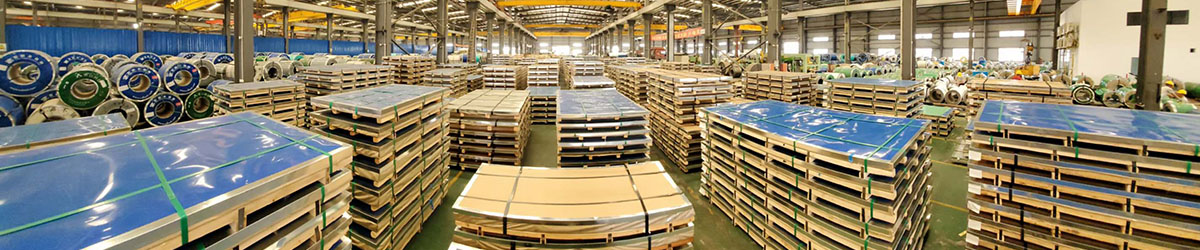
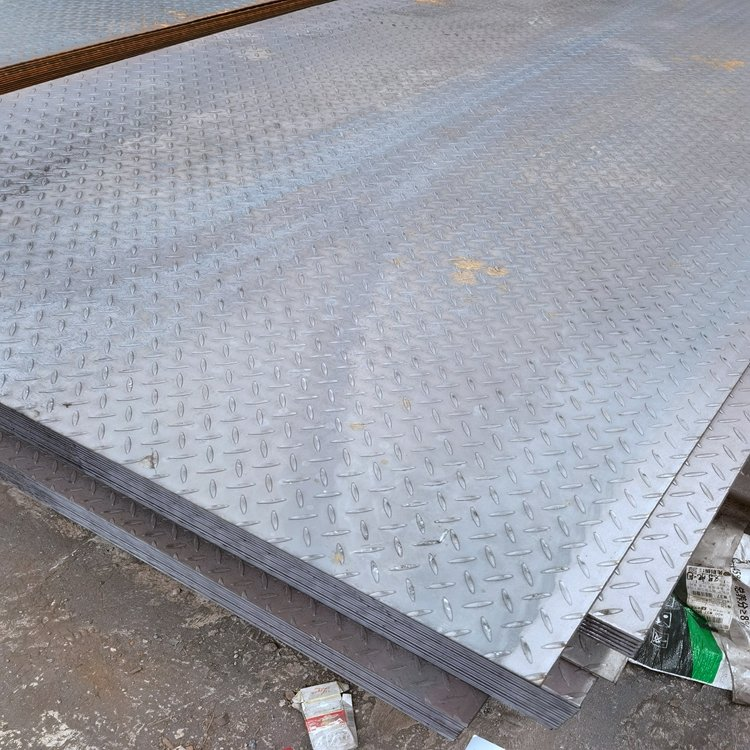
Carbon steel checkered plates are carbon structural steel plates with raised patterns on their surface. Due to their excellent anti-slip properties, aesthetically pleasing appearance, and high structural strength, they are widely used in construction, machinery manufacturing, transportation, and decoration.
Types of Carbon Steel Checkered Plate Patterns
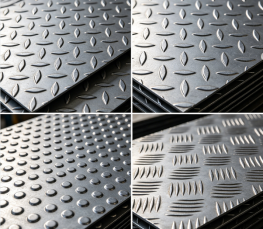
Common patterns on carbon steel plates include diamond, lentil, round bean, and combined patterns. Each design meets different application and aesthetic needs.
Lentil: The pattern outline is smooth, with a balanced anti-slip effect; it is currently the most mainstream pattern type on the market.
Diamond: The pattern has a cross-diamond structure, resulting in high friction and outstanding anti-slip performance.
Round Bean: The pattern consists of dotted raised areas, making the surface easier to clean and resulting in high wear uniformity.
Combined Patterns: Combining the anti-slip and structural advantages of two different patterns, resulting in even strength.
Carbon steel grades used for patterned steel plates.
Ordinary carbon structural steel conforming to GB/T700 standards is the most commonly used carbon steel material for patterned steel plates. Main grades include Q195, Q215, Q235 series, Q255, and Q275. High-quality carbon structural steel grades such as 10# and 20# can also be used.
Q195: Ordinary carbon structural steel, low strength, good plasticity, easy to weld and stamp.
Q215: Ordinary carbon structural steel, slightly higher strength than Q195, with good plasticity.
Q235(A/B): Ordinary carbon structural steel, excellent comprehensive mechanical properties, high cost-effectiveness.
Q255: Ordinary carbon structural steel, medium strength, better load-bearing capacity.
Q275: Ordinary carbon structural steel, high strength, relatively high hardness.
10#/20#: High-quality carbon structural steel, higher purity, stricter control of sulfur and phosphorus impurities.
How is patterned steel manufactured?
(1) Material selection: Select one type of steel and one type of iron as raw materials, and process them into strips and blocks respectively.
(2) Forging: Stack the two materials layer by layer, steel and iron, and forge them into a blank through repeated folding and twisting. (Note: This is the patterned steel blank, which can be used to make weapons such as swords and knives.)
(3) Steel clamping: Insert another piece of non-patterned steel with a higher carbon content into the patterned steel blank from the side. After clamping, it can be forged into a weapon.
(4) Quenching and tempering.
The purpose is twofold: a. To increase hardness and strength, and to give it a certain degree of toughness. b. To make the pattern clearer. We use tap water as the coolant.
(5) Grinding and polishing. The purpose is to improve the surface finish to show the pattern. We use mechanical polishing, from coarse to fine, in stages: after polishing to a certain extent, the pattern appears. The corrosive agents used in the experiments included nitric acid alcohol solution and dilute sulfuric acid. Due to different specific operations, the simulated patterns included bamboo leaf patterns, streamline patterns, herringbone patterns, and colorful cloud patterns, with the latter being the most magnificent.
Applications of Patterned Steel Sheets:
Construction Industry: Commonly used for flooring, stair treads, and walkways. Its anti-slip properties make it ideal for high-safety environments such as factories, warehouses, and outdoor locations.
Automotive Industry: Used in various components, including interior panels and exterior trim. These steel sheets combine aesthetics and strength, enhancing the vehicle’s visual appeal while maintaining structural integrity.
Shipbuilding Industry: Used in shipbuilding and repair, where corrosion resistance and the ability to withstand harsh marine environments are crucial.
Food Processing Industry: Widely used in manufacturing equipment and surfaces with extremely high hygiene and safety requirements. The textured surface of these sheets contributes to slip resistance, making them suitable for food processing plants, kitchens, and other environments with stringent safety standards.
With a wide selection of patterns, a variety of applicable carbon steel grades, and advanced manufacturing processes, these patterned steel sheets can be widely used in various industries. From construction and automobiles to shipbuilding and food processing, the versatility of patterned steel sheets makes them an indispensable and valuable resource in modern manufacturing and design.
Post time: Jun-05-2026


