

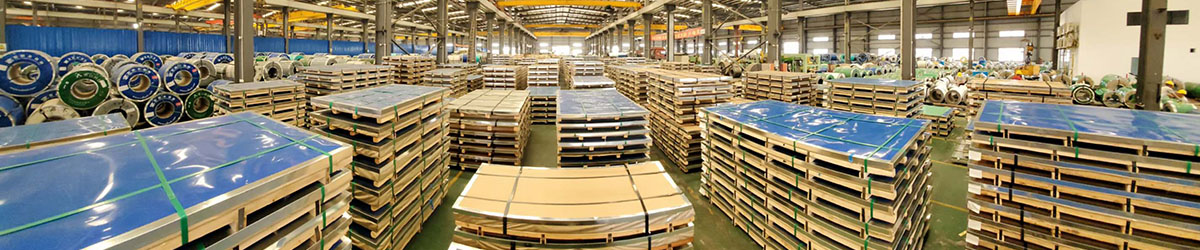
Cost, corrosion behaviour and application fit, with reference to Jindalai Steel Group Co., Ltd.
Choosing between a zinc coating and an aluminium-zinc coating is one of the first decisions a coil buyer makes, and it decides service life, first cost and the processing route. The two products look alike in the warehouse and behave differently outdoors, at cut edges and at temperature. Jindalai Steel Group Co., Ltd. supplies both coated coil families and works on the specification rather than on the price alone. This article compares them on the three criteria that settle most orders: cost, corrosion resistance and application fit.
1 What a Zinc Coating Does
A galvanized coil is steel strip passed through a molten zinc bath, so the coating bonds metallurgically to the substrate. Coating mass is specified by weight: Z275 carries 275 g/m² on both faces together, roughly 20 µm per side. The visible spangle is the grain structure of the zinc. Protection works in two ways at once. The coating is a barrier, and where it is scratched or cut the zinc corrodes preferentially and protects a small margin of exposed steel. That sacrificial behaviour is why galvanized sheet remains the default for roofing, wall panels and general fabrication.
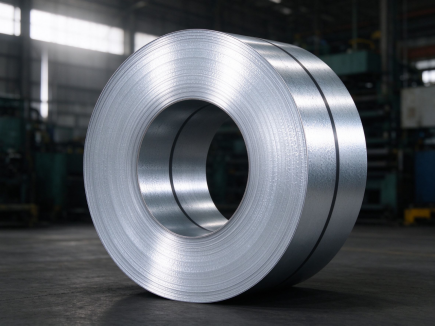
Figure 1 Hot-dip galvanized coil, Z275, with the characteristic zinc spangle
2 What an Aluminium-Zinc Coating Does
An aluminium-zinc coating is a different alloy: typically 55% aluminium, 43.4% zinc and 1.6% silicon, designated AZ150 when it carries 150 g/m² in total, about 75 g/m² per side. Aluminium takes most of the barrier duty, and the alloy is markedly more resistant to atmospheric corrosion than zinc of comparable mass. The trade-off appears at the cut edge, where little zinc is available to act sacrificially, so edges, drilled holes and bends need design attention. A third family exists for heat rather than for corrosion: aluminium-silicon, known as Aluminized Type 1 under ASTM A463, is the grade used for exhaust systems and furnace parts.
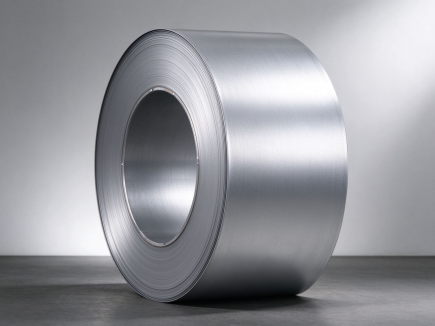
Figure 2 Aluminium-zinc coated coil, AZ150: matte surface, no spangle
Table 1 sets the three families side by side on the values a specification has to carry.
Table 1 Coating families and their typical specification values
|
Coating family |
Composition and designation |
Coating mass |
Continuous service limit |
|
Zinc (galvanized) |
Commercially pure zinc; Z275 | 275 g/m² total, approx. 20 µm per side |
About 200 °C |
|
Aluminium-zinc |
55% Al, 43.4% Zn, 1.6% Si; AZ150 | 150 g/m² total, approx. 75 g/m² per side |
About 300 to 350 °C |
|
Aluminium-silicon |
Al with about 10% Si; Type 1, ASTM A463 | Typically 150 g/m² |
650 °C, up to 800 °C by grade |
3 Cost Comparison
First cost favours galvanized. The zinc bath is a simpler process, less alloying metal is consumed per tonne and Z275 is normally the lower-priced coil at the mill gate. Aluminium-zinc carries a premium that reflects its alloy content and the tighter process control, and the gap moves with the aluminium and zinc markets, so it has to be confirmed order by order rather than assumed.
Whole-life cost often reverses the comparison. A coating that lasts longer means fewer replacements, less maintenance and less disruption to a production line. The useful question is not which coil is cheaper per tonne, but whether the service environment justifies paying for coating life. For a sheltered interior panel, it usually does not; for an unwashed industrial roof, it usually does.
4 Corrosion Resistance
In atmospheric exposure the aluminium-zinc coating outperforms galvanized by a wide margin, and the published salt-spray results in Table 2 show the scale of the difference. Zinc still wins where the coating is broken: its sacrificial action holds the exposed steel back, while an aluminium-rich coating relies on the barrier and on the design detail to keep the edge dry. Neither coating survives permanent immersion, strong acid or alkaline contact, and neither should be specified for those duties.
Table 2 Corrosion and temperature performance, typical values
|
Measure |
Z275 galvanized |
AZ150 aluminium-zinc |
| Salt spray to 5% red rust |
400 to 600 hours |
1,200 to 2,000 hours |
| Relative atmospheric life |
1x (reference) |
2x to 6x, by environment |
| Cut-edge protection |
Sacrificial, tolerant of damage |
Limited; edge design and treatment needed |
| Continuous service limit |
About 200 °C |
About 300 to 350 °C |
5 Applications
The choice usually follows from the exposure, not from the price list. Table 3 maps the common duties to the coating that suits them. Where a component is cut, drilled or folded after coating and then left outdoors, the edge is the weak point, and either a galvanized grade or an edge treatment is the safer specification.
Table 3 Application selection matrix
|
Application |
Recommended coating |
Reason |
| Roofing and wall cladding |
AZ150; Z275 for sheltered or budget work |
Long atmospheric life per unit of coating mass |
| Exhaust systems, heat exchangers, furnace parts |
Aluminium-silicon, Type 1 |
Retains a protective oxide layer at 650 to 800 °C |
| Agricultural equipment and fencing |
Z275 |
Sacrificial protection where abrasion breaks the coating |
| HVAC ducting and appliances |
Z275 |
Formability and lower first cost |
| Cut and drilled outdoor components |
Z275, or AZ150 with edge treatment |
Edge corrosion governs service life |
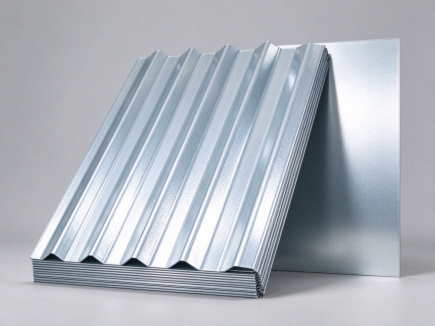
Figure 3 Coated sheet formed into trapezoidal roofing profile, the largest volume application for both coatings
6 Conclusion
Galvanized coil is the lower-cost, more forgiving product, and it remains the right default where the coating will be cut or damaged and where the environment is moderate. Aluminium-zinc coil costs more per tonne and returns that premium in atmospheric life, provided the design protects the cut edges. For genuine high-temperature duty neither is correct, and the aluminium-silicon grade should be specified instead.
Jindalai Steel Group Co., Ltd. supplies all three families and can match the coating mass and substrate grade to the exposure. The practical advice is to state the environment, the cut-edge treatment and the service temperature on the enquiry, and let the coating follow from those three answers.
Post time: Oct-30-2026


