

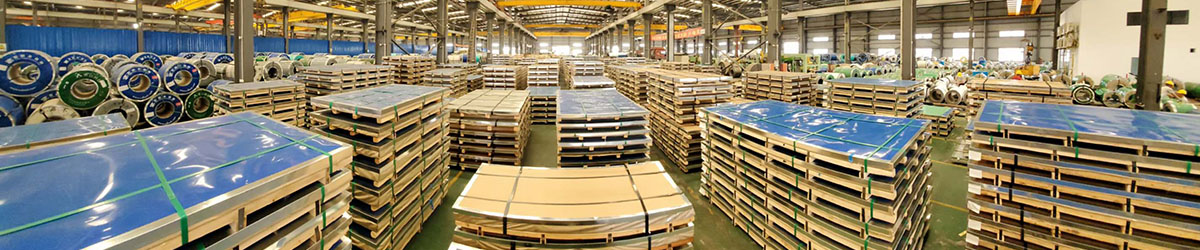
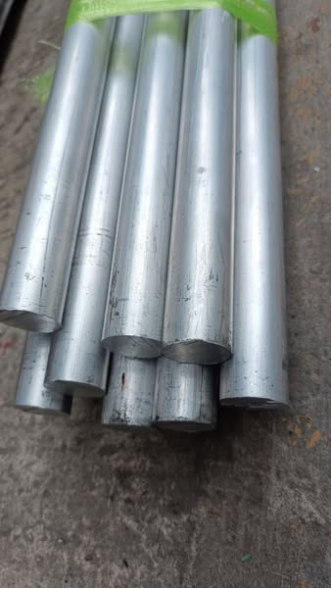
When selecting the right aluminum bars for various applications, understanding the properties and advantages of different aluminum alloys is crucial. Jindalai Steel Group Co., Ltd. is a professional manufacturer specializing in high-quality aluminum products, offering factory-direct sales, including 6061 aluminum alloy round bars, anodized aluminum bars, and custom processing services. Our extensive range of industrial aluminum bars is designed to meet diverse customer needs, from architectural decoration to aerospace components.
One of the most common questions we encounter is: Which is more suitable for manufacturing door and window profiles, 6063-T5 or 6061-T6 aluminum rods? While both alloys are popular, 6063-T5 is preferred in construction applications due to its excellent extrusion properties and attractive surface finish. However, 6061-T6 offers higher strength and corrosion resistance, making it ideal for structural components requiring greater durability.
Another key consideration is thermal conductivity, especially when selecting aluminum rods for electronic heat sinks. A comparison of 6061 and 5052 aluminum rods shows that 5052 aluminum rods have better thermal conductivity, making them more suitable for heat dissipation applications. However, 6061 aluminum rods are known for their high strength and versatility, which may be more advantageous in certain industrial environments.
In the aerospace industry, the choice between 7075-T6 and 2024-T3 aluminum alloy bars typically requires striking a balance between strength and corrosion resistance. 7075-T6, renowned for its high strength-to-weight ratio, is ideal for aerospace structural components. However, 2024-T3 offers superior corrosion resistance, which is crucial for components exposed to harsh environments. The final choice depends on the specific application requirements.
For marine components, the choice between 5083 and 5052 aluminum rods is crucial, as it directly affects their service life and performance in seawater environments. 5083 aluminum is renowned for its superior resistance to seawater corrosion, making it the preferred material for marine applications. On the other hand, 5052 aluminum also possesses good corrosion resistance, but its performance may not be as good as 5083 aluminum under extreme marine conditions.
For precision-machined parts, the machinability of aluminum bars is crucial. Among 2011 and 6061 aluminum bars, 2011 bars are favored for their superior machinability, enabling tighter tolerances and smoother surfaces. However, 6061 aluminum bars combine strength and machinability, making them suitable for a variety of applications.
For large-diameter aluminum bars (≥100mm), the choice between extrusion and forging has a significant impact on mechanical properties. Extrusion is generally better suited for obtaining uniform mechanical properties, while forging can be used for specific applications requiring higher strength.
In low-temperature environments (≤-40℃), selecting the appropriate aluminum rod grade is crucial to avoid low-temperature brittleness. Alloys such as 6061 and 5083 are generally recommended because they maintain toughness and ductility even under extreme conditions.
Finally, when selecting aluminum bars for welded structural components, a balance between weldability and strength is crucial. Alloys such as 3003, 5052, and 6061 each have their advantages, with 5052 offering excellent weldability and moderate strength, while 6061 boasts higher strength but may require preheating to achieve optimal weld quality.
Jindalai Steel Group Co., Ltd. is committed to providing customers with the best tailored aluminum solutions. Whether you need corrosion-resistant aluminum bars for marine applications or high-strength aluminum for aerospace components, our factory-direct sales and custom processing capabilities ensure you receive the highest quality products. Contact us today to learn about our extensive range of aluminum bars and how we can support your next project.
Post time: Dec-25-2025


