

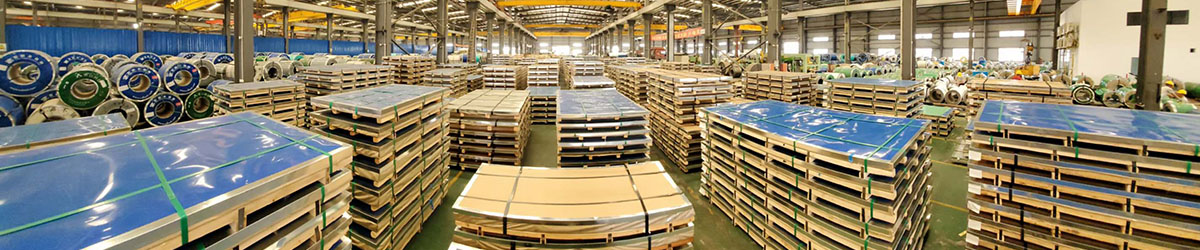
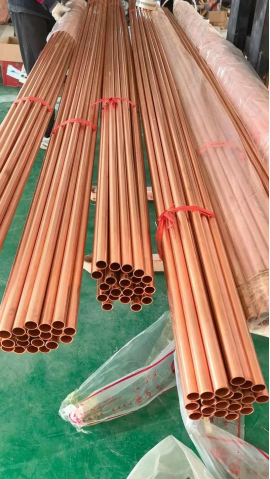
Copper pipes are divided into two types: pure copper pipes and brass pipes. Pure copper pipes are made from materials with grades such as T2, T3, T4, and TUP, and have a high copper content, exceeding 99.7%. Pure copper can be considered pure copper, with a purplish-red color, hence the name. T2 pure copper has a copper content of over 99.90%, while T3 pure copper has a copper content of over 99.7%. T3 pure copper has a slightly higher impurity content than T2 pure copper. For high conductivity requirements, T2 is recommended; for low conductivity, high strength, and low cost requirements, T3 is used.
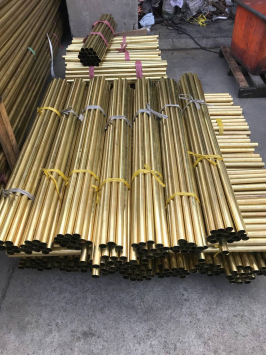
Brass pipes are made from materials with grades such as H59, H62, H68, HPb59, and HSn70, all of which are alloys of zinc and copper. For example, H62 brass pipe has a copper composition of 60.5%–63.5%, zinc of 39.6%, and other impurities less than 0.5%.
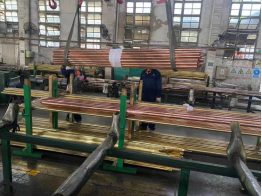
Copper pipes are manufactured using two methods: drawing and extrusion. Drawn copper pipes have an outer diameter of 3-200mm, while extruded copper pipes have an outer diameter of 32-280mm and a wall thickness of 1.5-5mm. Copper plate coiled pipes have an outer diameter range of 155-505mm, and are supplied in single pieces or coils. Copper pipes are widely used in oil pipelines, thermal insulation tracing pipes, and air separation oxygen pipelines.
Oxygen-free copper typically contains over 99.95% copper and has extremely low oxygen content, generally not exceeding 0.003%. It has higher purity than pure copper and is more expensive. It also has a brighter color and a good metallic luster under light reflection. Common applications include signal data transmission cables, semiconductor chips, aerospace, transformer inductors, and other high-precision instruments and critical components with high requirements.
Currently, the copper pipe industry is focusing on three directions: higher performance, greater environmental friendliness, and greater intelligence.
Unlike before, when copper was simply used for transporting goods, now, by adding a touch of special metal and improving processing techniques, precision copper tubes are produced that are not only strong and durable and rust-resistant, but also self-cleaning and antibacterial. These copper tubes are specifically designed for high-end equipment such as 5G base stations and cooling systems in new energy vehicles, capable of withstanding even higher demands.
Many factories are now abandoning the old, complex processes in favor of shorter, continuous production lines, and are using large quantities of recycled scrap copper as raw materials. They are also monitoring carbon emissions at every step, striving for a low-carbon, closed-loop production process, and recycling waste materials
Factory processes are now managed with digital technology to control quality and allow for flexible production adjustments, enabling rapid adaptation to different types of copper tubes. For example, complex applications such as integrated photovoltaic, energy storage, and charging systems, and ultra-efficient heat exchangers, require copper tubes with specific specifications, which can now be precisely supplied.
Post time: Mar-25-2026


