

Understanding the Forming Principle of Spiral Pipes
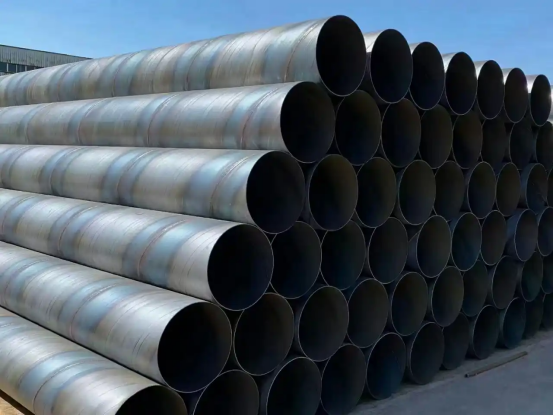
Spiral pipes, including spiral steel pipes and spiral submerged arc welded steel pipes, are manufactured using a unique forming principle that allows for the production of large-diameter pipes from relatively narrow steel strips. This process involves winding the steel strip in a spiral configuration, which not only optimizes material usage but also enhances the structural integrity of the pipe. The spiral rolled welded steel pipe is particularly advantageous in applications requiring significant strength and durability, making it a preferred choice for various engineering projects.
Dimensions and Flexibility of Spiral Pipes
The typical ranges for spiral pipes vary significantly, accommodating diverse engineering needs. Diameters can range from a few inches to over 100 inches, while wall thicknesses can be adjusted to meet specific requirements. The steel grades used in manufacturing spiral insulated pipes and carbon threaded pipes also vary, ensuring that the pipes can withstand different environmental conditions and pressures. This flexibility in dimensions and materials allows Jindalai Steel Group Co., Ltd. to cater to a wide array of industries, from oil and gas to water supply and construction.
The Dominance of Double-Sided Submerged Arc Welding
Double-sided submerged arc welding (SAW) has emerged as the mainstream welding process for spiral pipes due to its ability to produce high-quality, thick welds that are essential for long-distance applications. This method ensures that the welds are not only strong but also have a uniform appearance, which is critical for maintaining the integrity of the pipe under pressure. The use of SAW in the production of spiral pipes guarantees that they meet stringent quality standards, making them reliable for critical infrastructure projects.
Core Advantages of Spiral Pipes
Spiral pipes offer several core advantages that make them an ideal choice for various applications. Their large-diameter economy allows for the efficient transportation of fluids and gases, while their strong radial pressure resistance ensures they can withstand high-pressure environments. Additionally, the flexible dimensions of spiral pipes enable engineers to design systems that are tailored to specific project requirements. These advantages are maximized in scenarios such as oil and gas pipelines, water distribution systems, and structural applications where strength and durability are paramount.
Application Scenarios for Spiral Pipes
The unique properties of spiral pipes make them suitable for a wide range of application scenarios. In the oil and gas industry, for instance, their ability to handle high pressures and large volumes is crucial for pipeline systems. Similarly, in water supply networks, the strong radial pressure resistance of spiral insulated pipes ensures reliable service over long distances. Furthermore, the flexibility in dimensions allows for customized solutions that meet the specific needs of each project, reinforcing the importance of spiral pipes in modern engineering and construction.
In conclusion, spiral pipes, including various types such as spiral submerged arc welded steel pipes and spiral insulated pipes, represent a versatile and efficient solution for contemporary engineering challenges. With their unique forming principles, flexible dimensions, and robust welding processes, they are well-equipped to meet the demands of diverse industries. Jindalai Steel Group Co., Ltd. stands at the forefront of this innovation, providing high-quality spiral pipes that cater to the evolving needs of the market.
Post time: Feb-21-2026


