

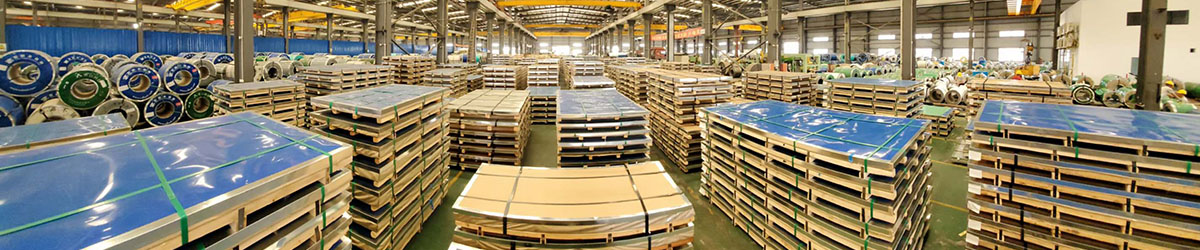
Introduction to Stainless Steel Plates
Stainless steel plates are essential materials in various industries, known for their durability, corrosion resistance, and aesthetic appeal. Jindalai Steel Group Co., Ltd. specializes in providing high-quality stainless steel products, including stainless steel plates, sheets, and decorative plates. Among the most popular options are the 304 stainless steel plate, 316 stainless steel plate, and 201 stainless steel plate. Each of these grades has unique properties and applications, making them suitable for different environments and uses.
Composition and Microstructure of Stainless Steel Plates
Stainless steel plates can be classified into five major families based on their microstructure: austenitic, ferritic, martensitic, duplex, and precipitation hardening. Austenitic stainless steels, such as 304 and 316, are known for their excellent corrosion resistance and formability. Ferritic stainless steels offer good resistance to stress corrosion cracking but are less ductile. Martensitic stainless steels are known for their hardness and strength, making them suitable for applications requiring high wear resistance. Duplex stainless steels combine the best properties of austenitic and ferritic steels, while precipitation hardening stainless steels are designed for high strength and corrosion resistance. Understanding these classifications helps in selecting the right stainless steel plate for specific applications.
Why 304 and 316 Stainless Steel Grades Are Popular
The 304 and 316 stainless steel grades are the most commonly used due to their exceptional properties. The primary difference between the two lies in their resistance to chloride ion corrosion. While 304 stainless steel is suitable for many applications, it is less resistant to corrosion in marine environments compared to 316 stainless steel, which contains molybdenum, enhancing its resistance to pitting and crevice corrosion. This makes 316 stainless steel the preferred choice for applications in chemical processing, marine environments, and other harsh conditions. Jindalai Steel Group Co., Ltd. offers both grades, ensuring that customers can find the right material for their specific needs.
Hot-Rolled vs. Cold-Rolled Stainless Steel Sheets
When it comes to stainless steel sheets, the choice between hot-rolled and cold-rolled options is crucial. Hot-rolled stainless steel sheets are produced at high temperatures, resulting in a rough surface finish and less dimensional accuracy. However, they are generally more cost-effective and suitable for applications where surface quality is not a primary concern. In contrast, cold-rolled stainless steel sheets undergo processing at room temperature, resulting in a smoother surface finish, higher dimensional accuracy, and improved mechanical properties. Cold-rolled sheets are ideal for applications requiring precise tolerances and a polished appearance, such as decorative plates and architectural elements.
Conclusion: Choosing the Right Stainless Steel Plate
In conclusion, selecting the right stainless steel plate involves understanding the differences in composition, properties, and applications among various grades and types. Jindalai Steel Group Co., Ltd. provides a comprehensive range of stainless steel products, including brushed or hairline plates, decorative plates, and sheets, catering to diverse industry needs. Whether you require a 304 stainless steel plate for general use or a 316 stainless steel plate for more demanding environments, our expert team is here to assist you in making the best choice for your project. With our commitment to quality and customer satisfaction, you can trust us to deliver the finest stainless steel solutions.
Post time: Mar-02-2026


