

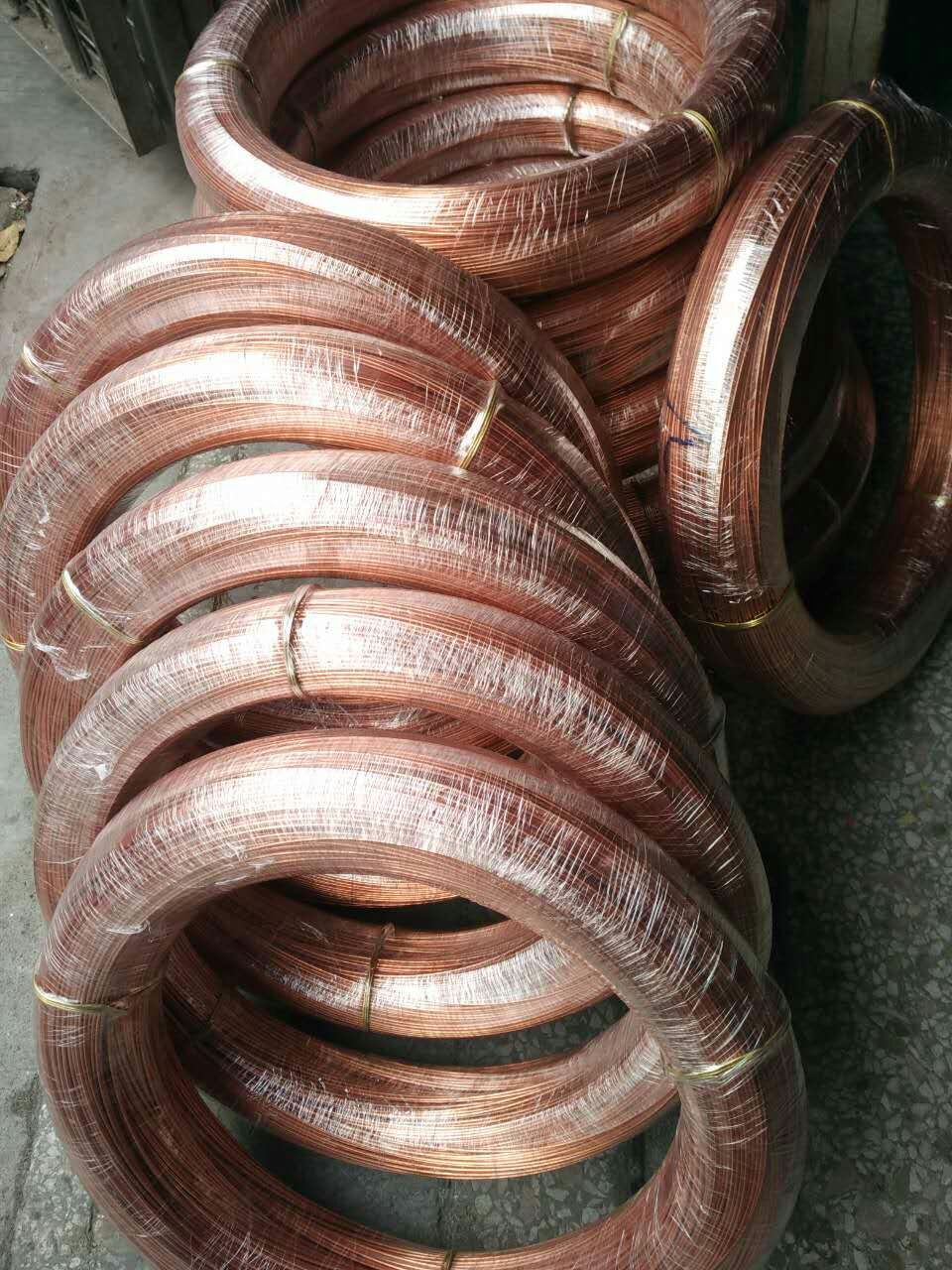
Copper wire, a metallic wire processed from high-purity electrolytic copper, possesses excellent electrical conductivity, thermal conductivity, and corrosion resistance, making it widely used in numerous fields such as power, electronics, communications, and welding materials. It has a purplish-red color, high copper content, few impurities, and the highest conductivity, making it the preferred material for wires, cables, and coils. Our home wiring, appliance power supply, and charging station current transmission almost entirely rely on copper wire. It is safe, heat-resistant, and not easily oxidized, ensuring stable current transmission and reducing heat generation and loss. This is why qualified electrical wires must use pure copper, not other metals as substitutes.
Copper wire is mainly classified into the following categories according to its composition and performance:
T2 Copper: The most commonly used, with a copper content ≥99.90%, conductivity up to 100% IACS, high cost-effectiveness, and the preferred material for busbars, windings, and large conductors.
TU1/TU2 Copper (Oxygen-Free Copper): Extremely low oxygen content, with TU2 having an oxygen content of no more than 0.003%, conductivity up to 100%-101% IACS. It features resistance to hydrogen embrittlement, good machinability, and weldability, making it suitable for vacuum environments and high-temperature conditions.
TP1/TP2 copper (phosphorus deoxidized copper): Conductivity approximately 97%-99% IACS, weld-friendly, and resistant to hydrogen embrittlement, suitable for piping and heat exchangers.
The tensile strength of copper wire is generally 205-315 N/mm², and its Vickers hardness is 50-120 HV.
Copper wire has a rich specification system, which can be divided by diameter or cross-sectional area, or by wire diameter into different grades.
Single wire diameter is the basic specification of copper wire. Depending on the application, common single wire diameters include 0.05mm, 0.07mm, 0.10mm, 0.12mm, and 0.15mm. In addition, wire diameters of 0.3mm, 0.6mm, 0.8mm, 1mm, 1.5mm, and 2mm are also commonly found in various industrial applications to meet the needs of different scenarios. In terms of processing, copper wire can also be drawn into extremely fine micron-level copper wires, with diameters reaching up to 0.016 mm.
Regarding copper braided wire/strip, the standard single wire diameters are 0.10 mm, 0.12 mm, and 0.15 mm, with cross-sectional areas ranging from 0.2 mm² to 300 mm². Common specifications include various cross-sectional areas such as 2 mm², 4 mm², 6 mm², 8 mm², 10 mm², 16 mm², 25 mm², 35 mm², 50 mm², 100 mm², and 120 mm², which can be used in copper braided strip/wire products.
Furthermore, copper wire can also be woven and processed into various products such as copper wire mesh, copper stranded wire flexible connectors, and tin-plated copper braided strips. Copper wire mesh commonly uses different mesh counts such as 30 mesh, 60 mesh, and 80 mesh.
Many people think that copper wire is just “a single wire,” but its manufacturing process is actually quite complex. From copper ingots to fine wires, the process involves multiple steps including heating, rolling, drawing, and annealing. The finer the copper wire, the higher the requirements for processing and purity. Some ultra-fine copper wires used in high-end electronic devices even require repeated processing under high-precision equipment to ensure toughness and conductivity.
For more information about copper wires, please feel free to contact us.
Post time: Apr-22-2026


