
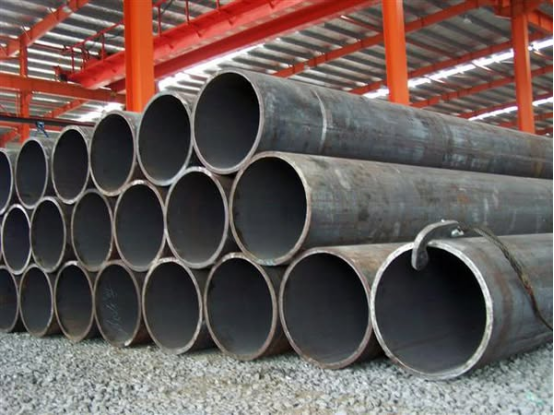
Choosing the right welded pipe for your building or industrial project can be overwhelming with choices. Welded pipes come in a wide variety, including carbon steel, stainless steel (304/316L), and alloy steel, making it crucial to understand your specific application requirements. Jindalai Steel Group Co., Ltd., a leading welded pipe supplier, offers a comprehensive product range to meet diverse needs. In this blog post, we’ll explore key considerations for selecting the right welded pipe, focusing on straight seam and spiral welded pipes for fluid transport, as well as other important factors.
Comparison of Carbon Steel Welded Pipes and Stainless Steel Welded Pipes
One of the most common dilemmas faced by engineers and project managers is deciding whether to use carbon steel welded pipe or stainless steel welded pipe for municipal water supply and drainage systems. Carbon steel welded pipe is favored for its high strength and low cost, making it suitable for a variety of applications. However, in environments with a high risk of corrosion, such as water supply systems, stainless steel welded pipe (304/316L) is a better choice due to its superior rust resistance.
Comparison of Thin-Walled Welded Pipes and Thick-Walled Welded Pipes for Steel Structures
In the support of building steel structures, the choice between thin-walled and thick-walled welded steel pipes is crucial. Thin-walled welded steel pipes are lighter and easier to handle, making them ideal for structures with weight restrictions. Thick-walled welded steel pipes, on the other hand, offer higher strength and durability, making them more suitable for heavy-duty applications. The final choice should be based on the specific load requirements and structural integrity needs of the project.
Corrosion Protection Solutions in High Humidity Environments
In high-humidity coastal environments, the risk of corrosion increases significantly. Therefore, it is recommended to choose galvanized or plastic-coated anti-corrosion welded pipes instead of ordinary welded pipes. These protective coatings can extend the service life of the pipes and ensure that they maintain their performance under harsh environmental conditions.
Large-Diameter Pipeline Engineering: Comparison of Submerged Arc Welding and High-Frequency Welding Pipelines
For large-diameter pipeline projects (≥500mm), the choice between submerged arc welded (SAW) pipe and high-frequency resistance welded (ERW) pipe is crucial. SAW pipe is known for its ability to withstand high pressures and is commonly used in the oil and gas industry. ERW pipe, on the other hand, is suitable for lower-pressure applications and is generally more cost-effective. The selection should be based on the specific requirements of the pipeline, including pressure rating and fluid type.
Selection Criteria for Q235B and Q355B Welded Steel Pipes
When selecting welded steel pipes, understanding the material specifications is crucial. Q235B and Q355B are two common grades of carbon steel welded pipes. Q235B is suitable for general structural applications, while Q355B offers higher strength and is ideal for more demanding applications. Factors such as load-bearing capacity, environmental conditions, and project specifications should be considered when making a selection.
in conclusion
Choosing the right welded pipe is a critical decision that can affect the success or failure of a project. Whether you are considering straight seam welded pipe or spiral welded pipe for fluid transportation, or need to determine the most suitable material for your specific application, Jindalai Steel Group Co., Ltd. can provide you with professional guidance and high-quality products. We have a comprehensive product line of welded pipes, covering various materials such as carbon steel, stainless steel, and alloy steel, and are committed to meeting your needs and ensuring the success of your project. Contact us today to learn more about our products, and we will wholeheartedly provide you with the best welded pipe selection solution.
Post time: Dec-10-2025


