

Welcome to the world of stainless steel elbows, where sharp angles and endless choices await! If you’re still struggling to choose between 304 and 316L stainless steel elbows, you’re not alone. Let’s delve into these gleaming, amazing products to help you make the right choice for your piping needs.
304 vs. 316L: A Clash of Titans!
First, let’s discuss the main differences between 304 and 316L stainless steel elbows. Both are common choices, but each has its advantages and disadvantages. 304 stainless steel elbows are like a reliable friend, always present at various gatherings—ideal for everyday use, but not suitable for acidic or seawater environments. 316L stainless steel elbows, on the other hand, are the “superheroes” of stainless steel elbows, with the addition of molybdenum, which enhances their corrosion resistance. If you need to handle acidic or alkaline media, 316L is your ideal choice.
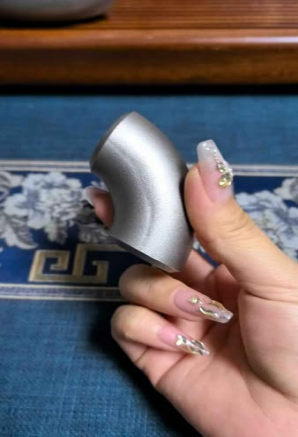
Select right angle and radius
Now, let’s talk about angles! Should you choose a 45°, 90°, or 180° elbow? It all depends on the flow rate and pressure in your pipe. A 90° elbow is ideal for narrow spaces, while a 45° elbow provides a smoother flow. Don’t forget the radius of curvature! Longer radius (1.5D) elbows are suitable for high flow rates, while shorter radius (1D) elbows can squeeze into tight spaces. Remember, if space is limited, a shorter radius elbow may be your best option.
Pressure resistance ratings: SCH10, SCH40, SCH80
When it comes to pressure resistance, the three wall thickness grades—SCH10, SCH40, and SCH80—are like three bears—one too weak, one just right, and one too strong! SCH10 is suitable for low-pressure applications, SCH40 is an all-around choice, and SCH80? That’s for when you really need to withstand high pressure. In engineering projects, it is essential to carefully select the appropriate grade based on the pipeline pressure!
Large Axis vs. Small Axis: The Spatial Dilemma
Speaking of space, let’s compare long radius (1.5D) and short radius (1D) elbows. Long radius elbows are ideal for reducing fluid resistance, while short radius elbows are perfect for installation in confined spaces. If you work in narrow areas, short radius elbows are a must-have. But don’t expect their performance to match that of long radius elbows!
Food-grade vs. Hygiene-grade: The Cleanliness Dilemma
Now, let’s take a closer look at food-grade and sanitary-grade stainless steel elbows. Food-grade elbows are suitable for general food applications, while sanitary-grade elbows undergo a mirror-polished finish (Ra≤0.4μm) to meet the needs of high-end medical or food processing. The polishing grade is crucial—if you want to maintain absolute cleanliness, choose sanitary-grade!
Reducing Elbow Injuries: The Unsung Heroes
What about stainless steel reducing elbows? These little gadgets are perfect for connecting pipes of different sizes. Remember, the diameter and wall thickness of the pipes at both ends must match, otherwise your pipe installation could become a nightmare!
Duplex 2205/2507 vs. 316L: A Battle of Strength
Finally, let’s compare duplex 2205/2507 stainless steel elbows and 316L stainless steel elbows. While 316L stainless steel elbows are also a good choice, duplex stainless steel elbows offer superior corrosion resistance and strength. However, they are also slightly more expensive—quality comes at a price!
In short, whether you choose 304 stainless steel elbows or 904L super stainless steel elbows, Jindalai Steel Group Co., Ltd. can meet your needs. With the right elbows, you can quickly perform pipe installations like a professional! Enjoy your installation!
Post time: Jan-28-2026


