

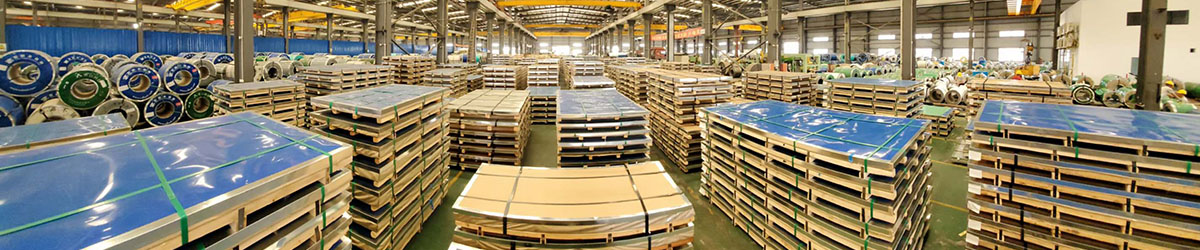
A sonic logging tube is a pipe pre-embedded inside the pile before the concrete is poured. Its core function is to provide a sealed channel for the probe of an ultrasonic testing instrument to enter the pile. Through this channel, after the concrete has hardened, inspectors can use sound waves to detect defects such as voids, mud inclusions, and segregation within the pile, thereby assessing the integrity and bearing capacity of the pile foundation.
Various types of acoustic testing tubes, both domestic and international.
Acoustic testing tubes, including acoustic logging tubes and ultrasonic testing tubes, are manufactured according to specific standards, which vary by region. In the United States, these testing tubes are typically classified according to ASTM standards; for example, seamless carbon steel tubes follow ASTM A106, while welded and seamless steel tubes follow ASTM A53. Internationally, ISO 3183 is widely recognized, especially in the pipeline sector of the oil and gas industry.
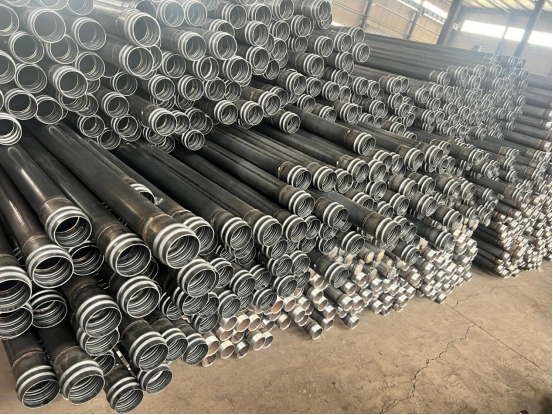
Connector types for acoustic logging tubes.
Acoustic logging tubes, also called ultrasonic testing tubes, have the following interface types: crimp-type, sleeve-type, spiral-type, socket-type, and flange-type. Among these, the crimp-type is the most widely used and easiest to install.
The commonly used national standard sizes for these four types of acoustic logging tubes are φ50, φ54, and φ57, with wall thicknesses ranging from a thin 0.8mm to 3.5mm.
| Type | Connection method | Features and applicable scenarios |
| Clamp type | The connector is crimped using a special hydraulic clamp, and the connection is achieved through a sealing ring. | Simple to operate, reliable in connection, and low in cost. Suitable for small to medium diameter pile projects where ease of construction is a high priority. |
| Spiral | The pipe has an external thread at one end and an internal thread at the other end. It is connected by screwing on the threads and is equipped with a sealing ring. | With a strong connection and good sealing performance, it is suitable for projects with strict sealing requirements, such as deep pile foundations and high water pressure. |
| Sleeve type | Weld a sleeve with a larger diameter onto the bottom pipe, then insert the top pipe into the sleeve and weld or glue it for sealing. | An earlier product that can reduce on-site welding work to some extent. Suitable for large-diameter pile foundations or harsh geological environments. |
| direct plug | A solderless connection method | This further simplifies the installation process and improves construction efficiency. |
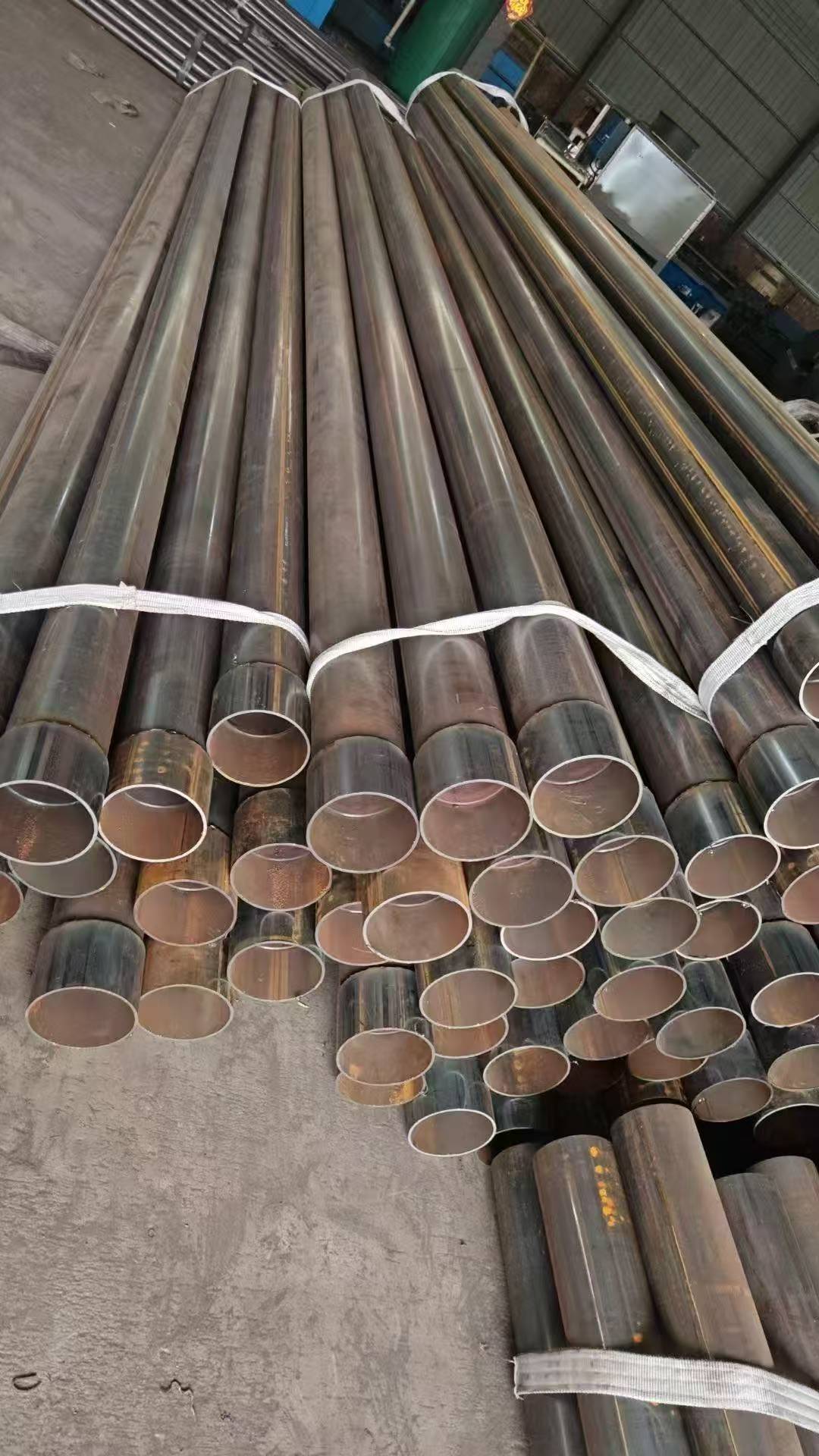
Each connector type has its specific application, ensuring that embedded acoustic detection tubes can be effectively integrated into a variety of systems.
Advantages of acoustic testing tubes.
Serving as probe channels for ultrasonic transmission testing.
More comprehensive and accurate testing: Capable of testing the concrete quality along the entire length and cross-section of the pile, accurately detecting internal defects such as segregation, mud inclusion, necking, and broken piles. The results are more intuitive and reliable than traditional methods such as low-strain methods.
Different types of acoustic testing tubes have their own advantages in installation, with the clamp-type being the most prominent.
Extremely fast installation: Using specialized hydraulic clamps for connection, the speed is 5 times faster than traditional methods.
Simple and flexible operation: No welding or skilled workers required; length can be customized according to site needs, with almost no material waste.
Stable and reliable connection: High tensile strength (clip-type can reach over 320 MPa), the connection is not easily loosened, effectively avoiding collisions with guide pipes, vibrators, etc.
Low construction cost: It is said that its construction cost is only about 1/3 of that of ordinary welded pipes.
Resistant to severe weather: Installation is not affected by weather.
Easy to fix: Easily fixed to the reinforcing cage.
Applications of Acoustic Testing Tubes
1. Pile Foundation Quality Inspection (Core Application).
This is the most important and widespread application of acoustic testing tubes. In the construction of cast-in-place piles for large-scale projects such as bridges, high-rise buildings, ports, and subways, acoustic testing tubes are pre-tied to the reinforcing cage and poured together with the concrete.
Detection Principle: By filling the tube with clean water as a coupling agent, an ultrasonic probe emits and receives signals inside the tube, measuring parameters such as the propagation speed and amplitude of sound waves in the concrete.
Diagnostic Capabilities: It can accurately determine whether there are internal defects in the pile body, such as mud inclusions, broken piles, necking, segregation, and voids. Its test results are also a key basis for pile foundation acceptance.
2. Pile Bottom Grouting and Accident Handling.
It can also serve as a conduit for pile bottom grouting. Grouting the pile bottom using acoustic testing tubes can significantly improve the bearing capacity of cast-in-place piles. Simultaneously, it can also serve as a channel for handling accident piles, used for flushing and grouting repair of defective areas.
3. Structural Health Monitoring.
Throughout the entire life cycle of structures such as bridges and tunnels, pre-embedded acoustic logging networks can be used to periodically monitor the development of microcracks in concrete.
4. Materials Science Research.
Used to analyze the acoustic wave propagation characteristics of concrete under different mix proportions and curing conditions.
In summary, acoustic testing tubing, including acoustic logging tubing and ultrasonic testing tubing, plays a crucial role in ensuring the integrity of various structures across industries. Jindalai Steel Group Co., Ltd., adhering to its commitment to quality and strictly adhering to domestic and international standards, has distinguished itself in this field, becoming an industry leader. For professionals seeking to implement effective non-destructive testing solutions, understanding the different grades, connector types, application scenarios, and advantages of these testing tubing materials is essential.
Post time: Aug-31-2026


