

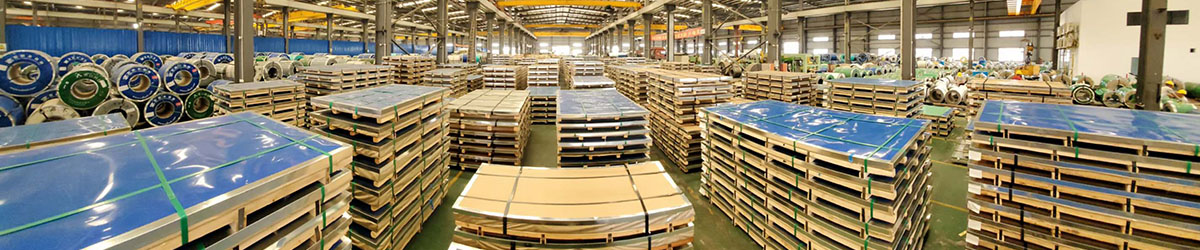
Aluminum rods are rod-shaped metal materials made from an aluminum base with added alloying elements. They serve as vital raw materials for national economic development. By adjusting the elemental composition, they are produced in eight major series—ranging from the 1XXX to 8XXX series—to meet the specific requirements of diverse sectors such as aerospace, transportation, architectural decoration, and new energy.
Aluminum rods are versatile materials made from aluminum or aluminum alloys. They come in a variety of shapes, sizes, and grades, each designed for specific applications. The most common types include round aluminum rods and extruded aluminum rods, which are produced using different manufacturing processes.
Aluminum alloys are classified according to their primary alloying elements. The most common series include:
| series | Alloy system | Typical grades | Key Features |
| 1XXX | Pure aluminum | 1050、1060、1100 | High plasticity, easy to form, and possesses good weldability and surface treatment properties. |
| 2XXX | Al-Cu-Mg series duralumin | 2014、2024(2A12) | High strength, heat resistance up to 150°C, and good machinability; however, due to poor corrosion resistance, it requires pure aluminum cladding. |
| 3XXX | Aluminum-manganese series | 3003 | Excellent rust resistance and good formability. |
| 4XXX | Aluminum-silicon system | 4043、4047 | Low melting point, high fluidity, wear and heat resistance, low coefficient of thermal expansion. |
| 5XXX | Aluminum-magnesium rust-proof aluminum alloy | 5052 | Cannot be strengthened by heat treatment; exhibits excellent corrosion resistance and high fatigue strength. |
| 6XXX | Al-Mg-Si system | 6061、6063、6082 | It offers a balanced combination of properties and moderate strength, along with excellent corrosion resistance, weldability, and surface treatment characteristics, earning it the reputation of an “all-rounder” among industrial aluminum materials. |
| 7XXX | Al-Mg-Zn-Cu series super-hard aluminum alloy | 7075 | Commercial-grade, high-strength aluminum alloy; stronger than mild steel. |
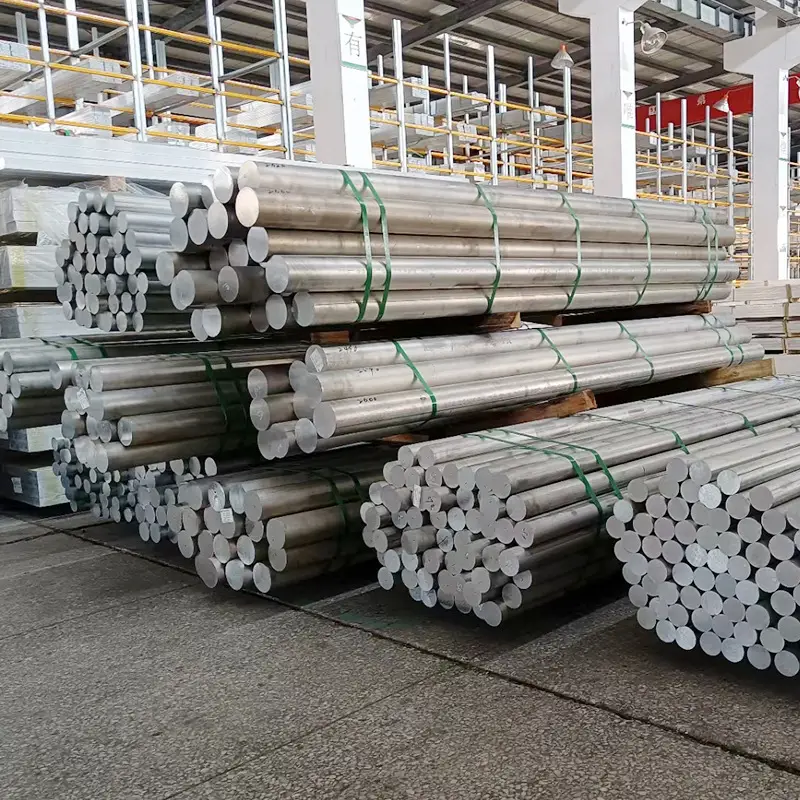
Meaning of status codes:
Designations such as O, T4, T5, T6, T651, and H112 represent the heat treatment or processing conditions of aluminum materials, which significantly influence their mechanical properties.
O (Annealed): A softened state characterized by maximum ductility.
T4: Achieved through solution heat treatment followed by natural aging; offers good strength and corrosion resistance.
T5: Achieved through cooling after high-temperature forming followed by artificial aging; provides high strength.
T6: Achieved through solution heat treatment followed by artificial aging; noted for high strength and hardness.
T651: Similar to T6 but includes a stress-relief treatment, resulting in improved machinability.
H112: Produced via strain hardening and stabilization; offers moderate strength and good corrosion resistance.
These designations are crucial for determining the suitability of aluminum rods for specific applications, as they directly affect performance metrics such as tensile strength, yield strength, elongation, and hardness.
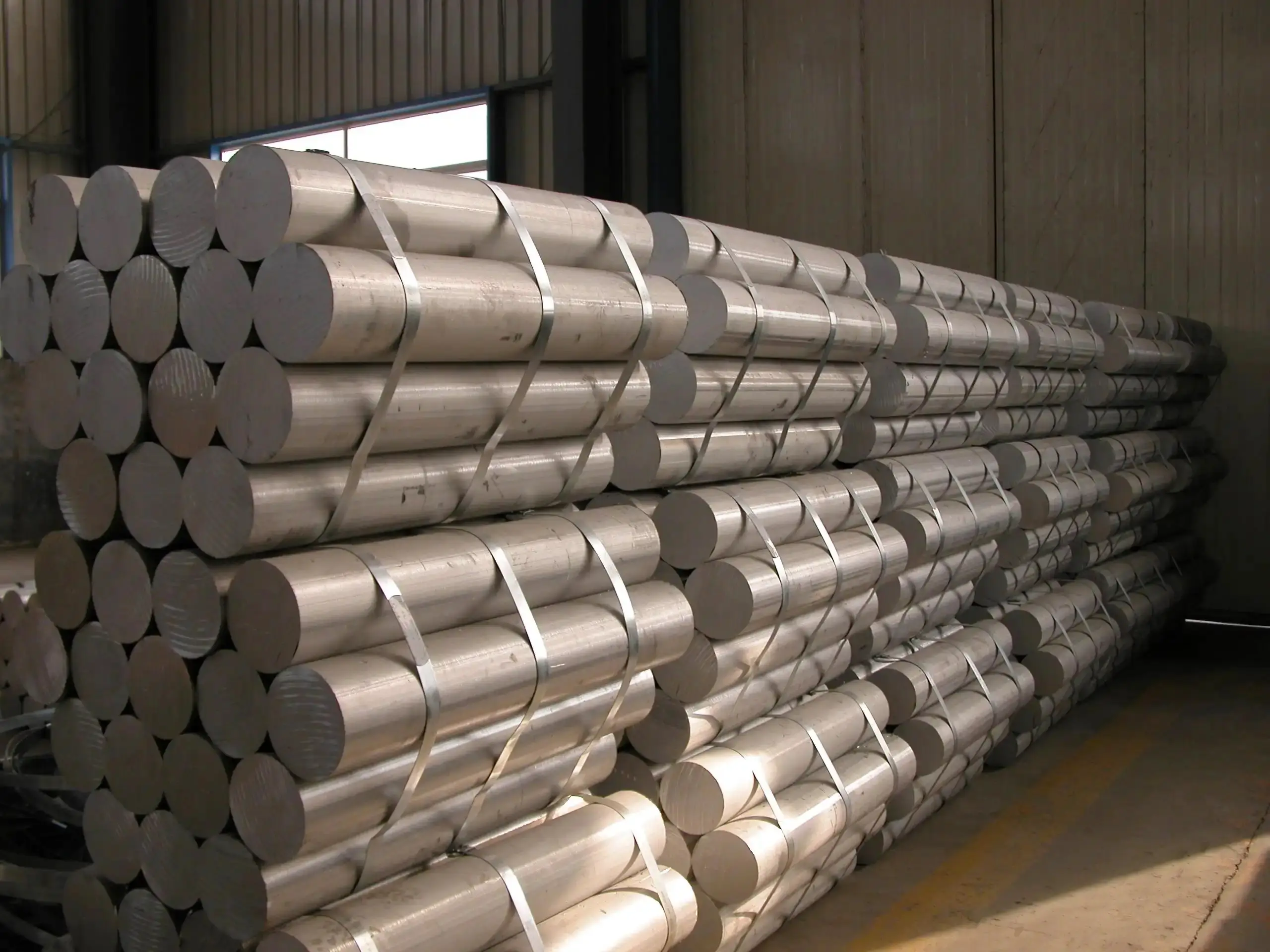
Is an aluminum rod with higher hardness always the better choice?
Although higher hardness may seem like a clear advantage, one must weigh strength against other properties—such as corrosion resistance, weldability, and machinability—when making a selection. For instance, while T6 aluminum rods offer high strength, their weldability may be inferior to that of lower-hardness tempers like T4 or T5.
In applications requiring welding, it may be more advantageous to choose an aluminum rod with lower hardness but superior weldability. Similarly, in corrosive environments, selecting an alloy with excellent corrosion resistance—even if its strength is slightly lower—often yields better long-term performance.
The reason 6063, 6061, and 6082 have become popular choices in the aluminum profile sector is fundamentally that they all belong to the 6000-series (Al-Mg-Si) alloy family. They offer a tiered range of performance characteristics across four key dimensions—strength, workability, corrosion resistance, and cost—collectively covering the vast majority of applications ranging from architectural decoration to heavy-duty industrial structures, all while delivering a superior overall cost-performance ratio compared to other aluminum alloy series.
6063 is the most widely used general-purpose alloy: with low alloying element content and excellent molten aluminum fluidity, it allows for the extrusion of highly complex, thin-walled profiles. It offers fast extrusion speeds and short lead times, and achieves a superior surface finish after anodizing. Accounting for 85% of architectural door and window profiles, it is the material of choice for building curtain walls, home décor, and lightweight assembly line frameworks.
6061 is the “all-rounder” with the most balanced overall performance: by adjusting the elemental composition of the 6063 alloy, its strength is boosted by over 40% while retaining good corrosion resistance and weldability. With no significant performance weaknesses, it is widely used in medium-load applications such as aerospace components, automotive structural parts, and general industrial frames, making it the most highly regarded general-purpose structural aluminum alloy in engineering.
6082 is a high-strength alloy specialized for heavy-load applications: known in the industry as a “high-strength upgrade” to 6061, it features increased silicon and manganese content. In the T6 temper, it achieves a tensile strength of 310–340 MPa and a yield strength of 280–305 MPa, while maintaining the corrosion resistance and weldability characteristic of the 6000 series. It specifically addresses the tendency of standard 6000-series alloys to deform or crack under heavy or alternating loads, making it the preferred material for heavy-duty industrial structures, rail transit carriage panels, and bridge supports.
In summary, understanding the various types and characteristics of aluminum rods, as well as the factors influencing their performance, is crucial for selecting the right material for your application. We are dedicated to providing high-quality aluminum rod products—including aluminum alloy rods, round rods, and extruded rods—to meet our customers’ specific needs. By comprehensively considering temper, mechanical properties, and intended use, you can make an informed choice that achieves the optimal balance of strength, corrosion resistance, weldability, and machinability.
Post time: Nov-09-2026


