

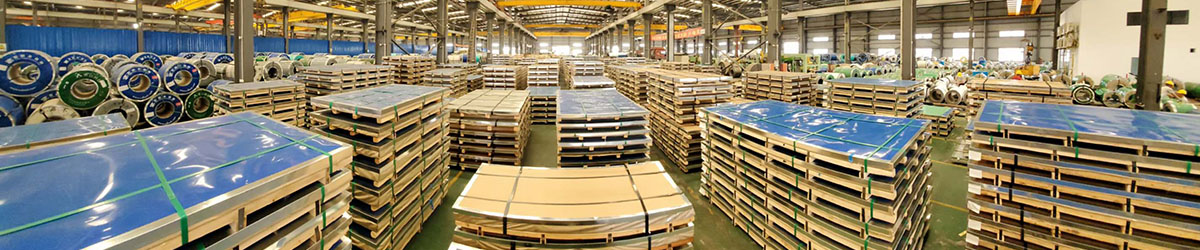
Carbon steel bars are long, solid bars made of iron-carbon alloy with a carbon content of 0.0218% to 2.11%. They are the most widely used basic steel product in modern industry, playing a vital role in the construction and manufacturing industries due to their high strength, durability, and wide range of applications.
Carbon steel bars come in various shapes, each designed to meet specific structural and aesthetic requirements. The most common shapes include round and square carbon steel bars, followed by hexagonal, flat (rectangular), and other irregular shapes.
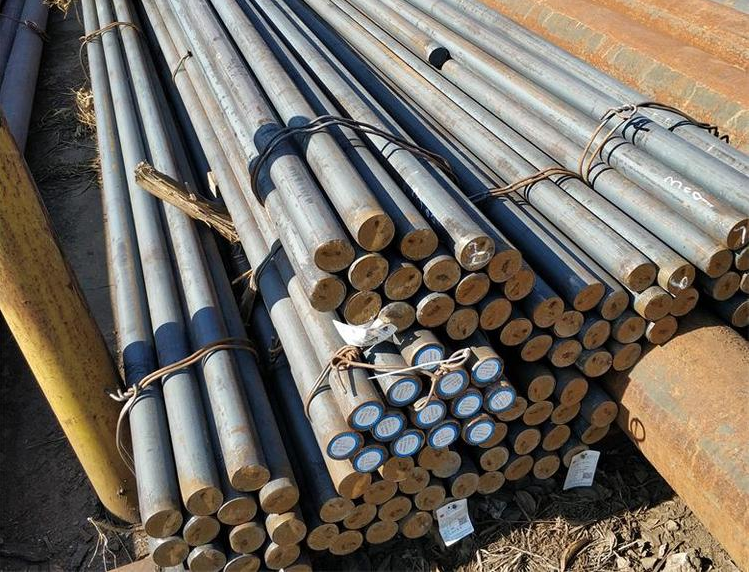
*Round steel is a bar with a circular cross-section and is the most common and widely used form in industry. Based on diameter, round steel can be further subdivided into:
*Bars: Straight steel bars with a cross-sectional diameter greater than 8mm.
*Wire rod/coil: Diameters typically between 5.5 and 30mm, delivered in coils.
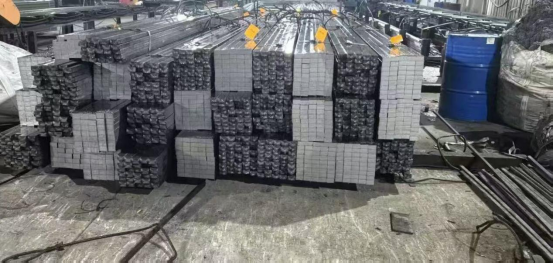
*Square steel is a bar with four equal sides, shaped like a “steel ruler.” Common specifications include 6×6mm, 12.7×12.7mm, and 25.4×25.4mm. Square steel is often used to manufacture structural components that need to withstand high pressure or as guide components in molds.
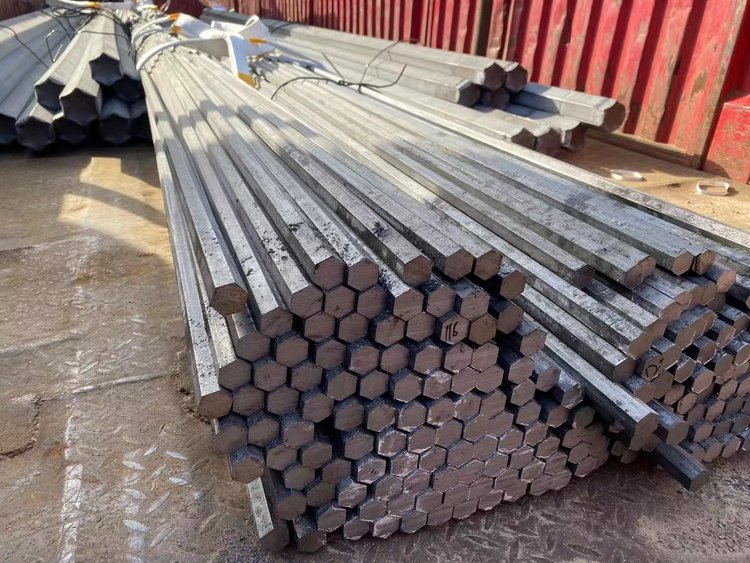
*Hexagonal steel is a bar with a regular hexagonal cross-section and is known as the “golden partner” for nuts. Common specifications include distances between opposite flats (AF) of 5.8mm, 9.5mm, and 17mm.
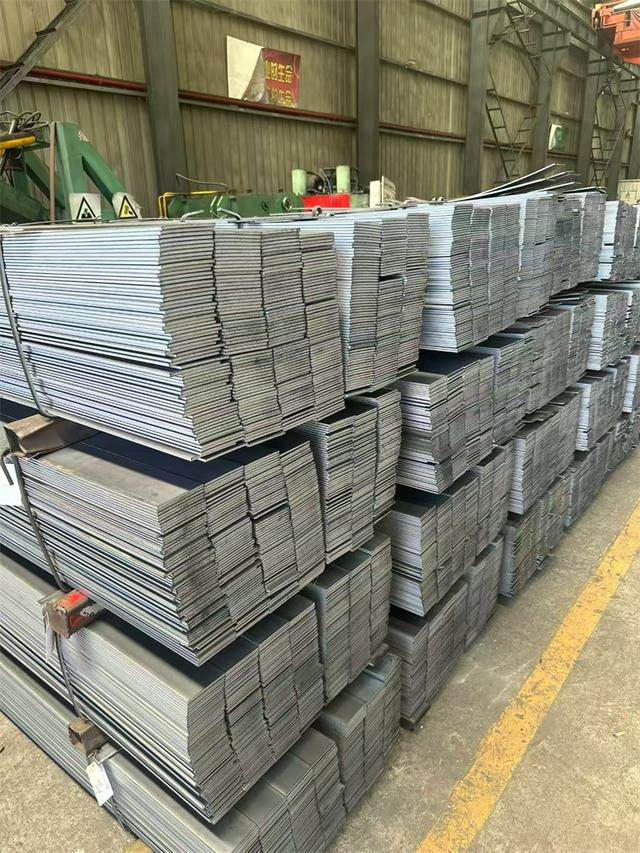
*Flat steel is a bar with a rectangular (long strip) cross-section; it can be understood as a flattened steel strip. Common specifications include 6.35×12.7mm, 5×20mm, and 12.7×25.4mm.
What materials are used in the manufacturing process of carbon steel bars?
The main raw material for carbon steel bars is carbon steel itself. Carbon steel is an alloy primarily composed of iron and carbon, also containing varying proportions of other elements such as manganese, silicon, and copper. The carbon content in steel varies from low to high, which significantly affects the performance of the final product.
Low-carbon steel, typically containing less than 0.3% carbon, is known for its excellent ductility and weldability, making it suitable for applications requiring forming and machining. Medium-carbon steel, with a carbon content between 0.3% and 0.6%, combines strength and ductility, making it ideal for structural applications. High-carbon steel, with a carbon content above 0.6%, is known for its hardness and wear resistance, making it suitable for applications requiring high strength and durability.
Besides carbon, other alloying elements can be added to enhance the specific properties of carbon steel bars. For example, adding manganese can improve hardenability and strength, while adding silicon can enhance the material’s oxidation resistance. Careful selection of materials and alloying elements is crucial for producing carbon steel bars that meet the stringent requirements of various industries.
What are the application areas of carbon steel bars?
Construction and Infrastructure: This is one of the largest user areas for carbon steel bars. Commonly used grades include low-carbon steel bars such as Q195, Q215, and Q235, mainly used as stirrups in reinforced concrete, steel trusses, and seismic joints in high-rise buildings. Q235 steel bars with a diameter of 12-20mm are a typical application specification. They are also processed into structural connectors such as anchor bolts and embedded parts.
Machinery Manufacturing Industry: Medium and high-carbon steel bars, such as 45# and 60#, are core materials. 45# steel bars, after heat treatment, can reach a hardness of HRC25-32. They are often directly processed into gear blanks, shaft parts, lead screws, bearings, and other medium-load transmission components. They can also be used to manufacture some machine tool structures and ordinary stamping dies, and are compatible with most conventional cutting and heat treatment processes. In the automotive and rail transportation sectors: Besides basic carbon steel bars, some low-alloy derivatives such as 20Cr and 40Cr bars are widely used, primarily for producing key components such as bolts, connecting rods, drive shafts, and chassis parts. The streamlined structure in the hot-rolled state can improve the fatigue life of parts, achieving a 15%-20% weight reduction compared to traditional castings. Some high-elasticity carbon steel bars can also be used to make elastic elements such as spring washers.
Carbon steel bars, including black steel bars, round steel bars, and square steel bars, are an indispensable component of various industries. Jindalai Steel Group is committed to providing high-quality carbon steel bars that meet the diverse needs of its customers. With their superior strength, durability, and versatility, carbon steel bars continue to play a vital role in shaping the future of construction, manufacturing, and other industries.
Post time: Jul-01-2026


