

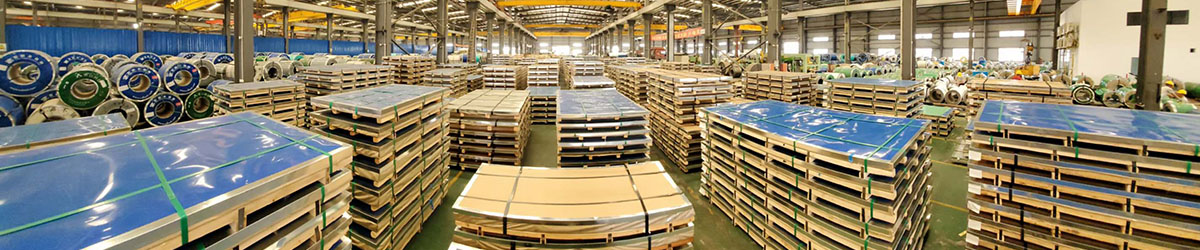
Copper alloy sheet is a processed plate-form material made with copper as the base and the addition of one or more alloying elements; it plays a vital role in various industries, ranging from construction to electronics.
The Difference Between Copper Alloy Plates and Pure Copper Plates
A pure copper plate is a single-metal sheet with a copper content exceeding 99.9%, whereas a copper alloy plate is formed by using copper as a base and adding elements such as zinc, tin, or nickel; the two differ in terms of composition, properties, and application scenarios.
| Comparison dimensions | Pure copper plate | Copper alloy plate |
| Electrically and thermally conductive | Excellent; electrical conductivity can reach 100% IACS. | Electrical conductivity decreases, typically to 10%–40% that of pure copper. |
| hardness | It is relatively low, with a Vickers hardness of approximately 40 HV, and the texture is rather soft. | Hardness can be increased by 3 to 8 times through solid-solution strengthening. |
| strength | The yield strength is only about 35 MPa. | The tensile strength of typical brass can reach 500 MPa. |
| Corrosion-resistant | It is prone to developing verdigris. | Depending on the composition, some alloys offer superior corrosion resistance. |
| color | Rose-red; turns purplish-red upon oxidation. | Brass is golden-yellow, while bronze is bluish-gray. |
Common copper alloy grades
| Broad category | Initial letter | Naming Conventions | Example |
| Pure copper (red copper) | T | T + sequence number; the higher the number, the lower the copper content. | T1、T2、T3 |
| Oxygen-free copper | TU | TU + Sequence Number | TU1、TU2 |
| Phosphorus-deoxidized copper | TP | TP + Sequence Number | TP1、TP2 |
| Silver-copper | TAg | T+Ag+Silver content | TAg0.1 |
| Ordinary brass | H | Average H+ and copper content | H62、H68、H90 |
| Special brass | H + symbol of the second element + content | Such as leaded brass HPb59-1 and tin brass HSn70-1. | |
| bronze | Q | Q + Symbol of primary major element + Content | QSn6.5-0.1、QAl10-3-1.5 |
| Cupronickel | B | B+ Nickel Content | B19、B30 |
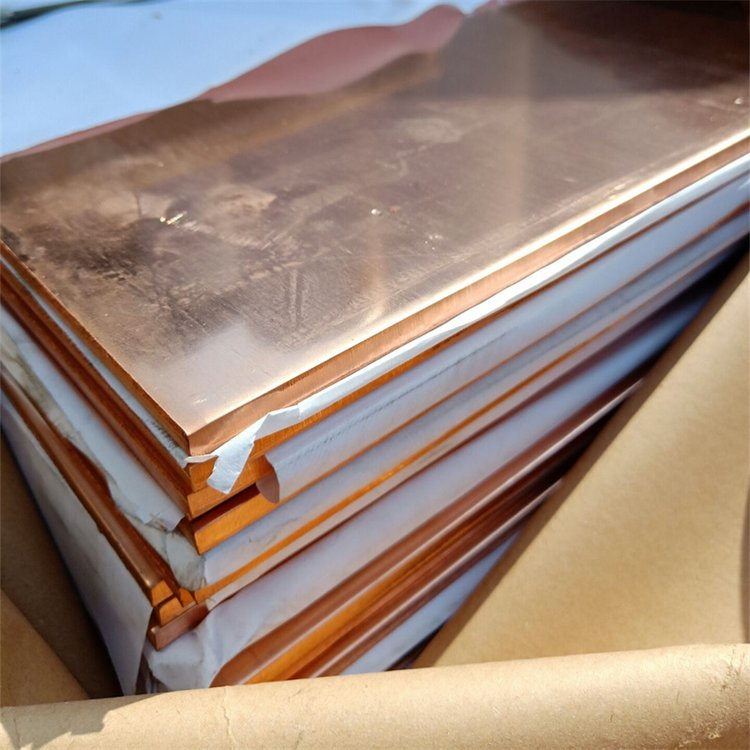
H62 and H65: These are two grades of brass. H62 contains approximately 62% copper, while H65 contains about 65%. Known for their excellent corrosion resistance, they are commonly used in plumbing and electrical applications.
T2: This is a high-purity copper grade, typically used in applications requiring excellent electrical conductivity, such as electrical wiring and components.
QSn6.5-0.1: This is a tin bronze grade with a tin content of approximately 6.5%. Renowned for its outstanding wear and corrosion resistance, it is suitable for applications such as marine engineering.
C17200: This is a high-strength copper alloy (also known as beryllium bronze) used in applications requiring high strength and hardness, such as tool and mold manufacturing.
Application Scenarios for Various Copper Alloy Sheets
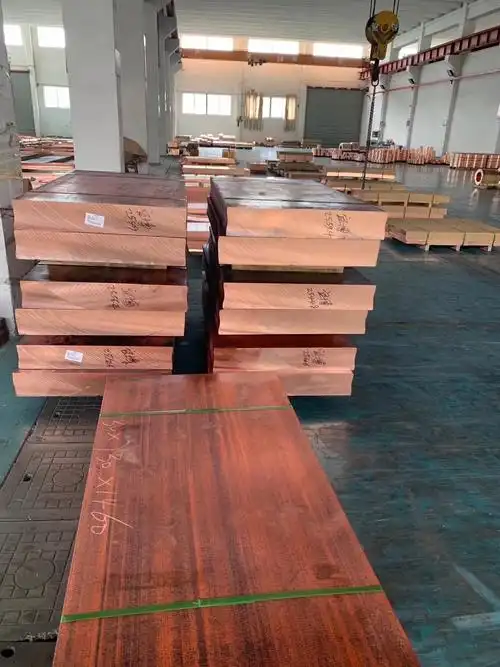
Depending on their material composition and performance characteristics, copper alloy plates are suitable for various applications across multiple industrial sectors, with each specific material serving a distinct, targeted purpose.
Pure Copper Plate: With excellent electrical conductivity, pure copper plate is an ideal choice for electrical applications, commonly used in wires, connectors, and circuit boards.
Brass Plate: Brass plate offers good corrosion resistance and machinability, making it common in pipe fittings, musical instrument manufacturing, and decorative applications.
Bronze Plate: Known for high strength and excellent wear resistance, bronze plate is suitable for components such as marine engineering parts, bearings, and bushings.
Cupronickel Plate (Copper-Nickel Alloy Plate): This type of plate features exceptional corrosion resistance, making it highly suitable for marine environments and commonly used in shipbuilding and offshore facilities.
Red Copper Plate: Red copper plate possesses high thermal and electrical conductivity, making it frequently used in heat exchangers and electrical components.
The role of the manufacturing process
Hot Rolling
High-temperature ingots are processed into slabs of a specific thickness. Large-scale deformation breaks down the as-cast microstructure, refines grains, and mitigates internal alloy defects, yielding suitable feedstock for subsequent cold rolling.
Cold Rolling
The sheet is further thinned at room temperature to achieve superior dimensional accuracy and surface finish. Work hardening enhances the material’s strength and hardness, enabling the production of high-precision copper alloy strips and sheets as thin as 0.05 mm.
Heat Treatment
Processes such as solution treatment, aging, and annealing are employed to relieve internal stresses induced by cold rolling and to balance the alloy’s strength and ductility.
Pickling
A chemical treatment process used to remove surface oxides and impurities, ensuring a clean surface in preparation for further processing.
Finishing
This stage involves polishing and coating the sheet to improve its appearance and enhance corrosion resistance.
Copper alloy sheet is a versatile material with excellent properties that make it suitable for a wide range of applications. We offer a comprehensive selection of copper alloy sheets—including pure copper, brass, bronze, cupronickel (copper-nickel alloy), and red copper—ensuring that customers can find the ideal product to meet their specific needs. Understanding the differences between these materials, as well as their grades and processing techniques, is essential for making informed purchasing decisions.
Post time: Sep-30-2026


