

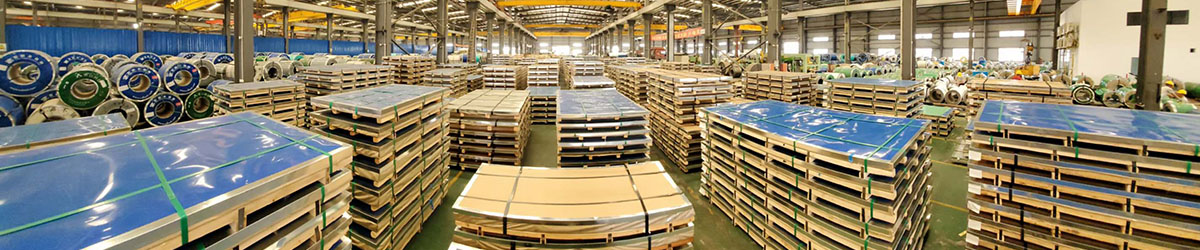
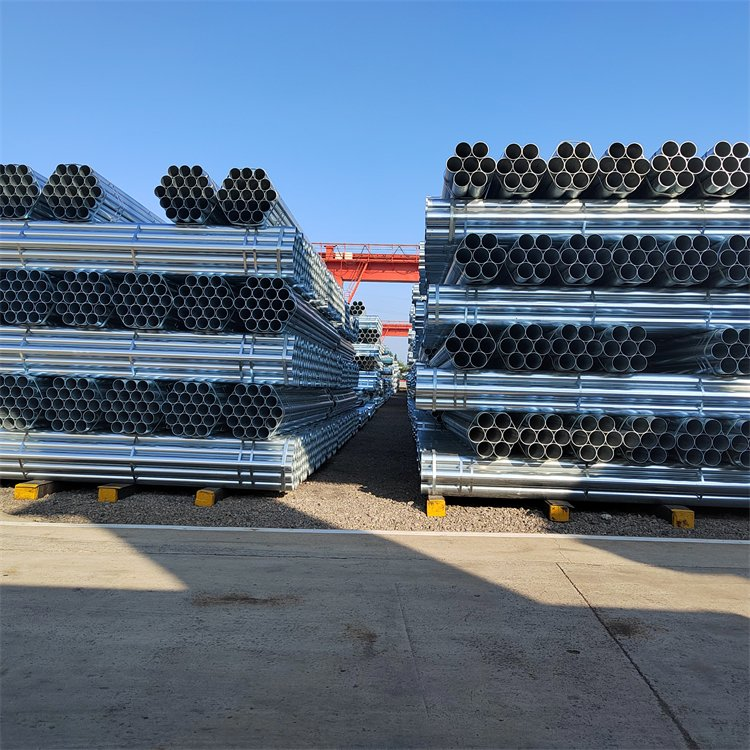
In the fields of construction and manufacturing, the choice of materials plays a crucial role in a project’s durability and service life. Galvanized steel pipe is one such popular material. As a leading enterprise in the iron and steel industry, Jindalai Steel Group Co., Ltd. specializes in the production of various high-quality galvanized steel pipes, including both hot-dip galvanized and electro-galvanized varieties.
The core production processes for galvanized steel pipes fall into two main categories: hot-dip galvanizing (the mainstream method) and electro-galvanizing; these processes differ significantly in terms of workflow, coating properties, and application scenarios.
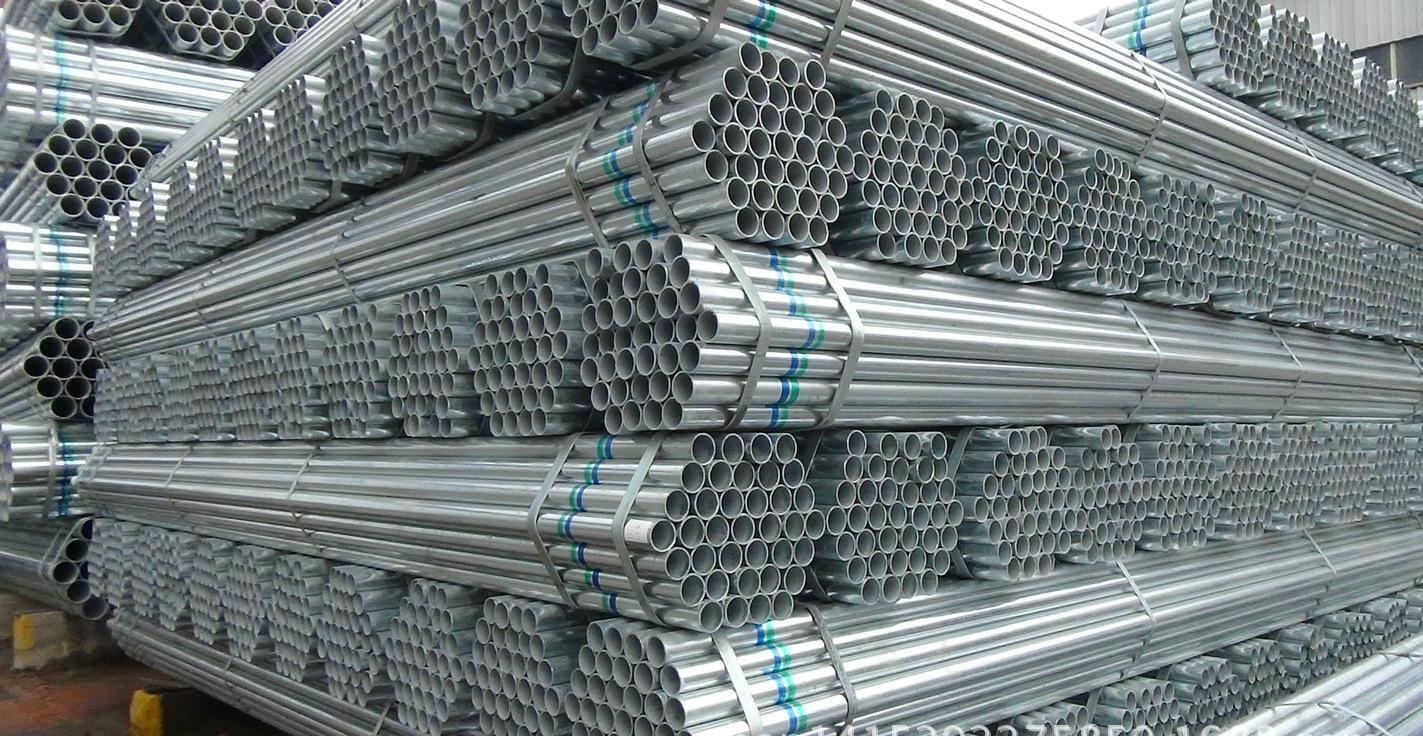
Types of galvanized steel pipes
Currently, the hot-dip galvanizing process is the most widely used in the industry; the entire workflow comprises three core stages:
Pre-treatment: This includes alkaline cleaning to remove surface oil and grease; hydrochloric acid pickling to remove mill scale; double rinsing with fresh water to eliminate residual acid and iron salts; immersion in an ammonium chloride/zinc chloride flux solution; and drying at 120–200°C for at least 150 seconds to prevent explosive spattering upon immersion in the molten zinc.
Hot-dip galvanizing process: The pre-treated steel pipes are immersed in molten zinc maintained at a strictly controlled temperature of 450 ± 5°C. A screw conveyor system ensures the pipes react fully within the zinc bath, facilitating a metallurgical reaction between the iron substrate and the zinc to form multi-layered zinc-iron alloy coatings.
Post-treatment: This involves a sequence of steps: external air blowing to remove excess zinc from the surface; internal air blowing to clear residual zinc from the pipe’s inner wall; air cooling followed by immersion in an 80°C water cooling tank; passivation treatment to enhance corrosion resistance; water rinsing; and final inspection and weighing before warehousing.
Electro-galvanized steel pipe: Unlike hot-dip galvanizing, electro-galvanizing involves depositing a thin layer of zinc onto the steel surface through an electrochemical process. This method produces a smoother finish and is often used in applications where appearance is a priority. However, the zinc coating on electro-galvanized steel pipe is thinner than that on hot-dip galvanized pipe, making it less suitable for use in harsh environments.
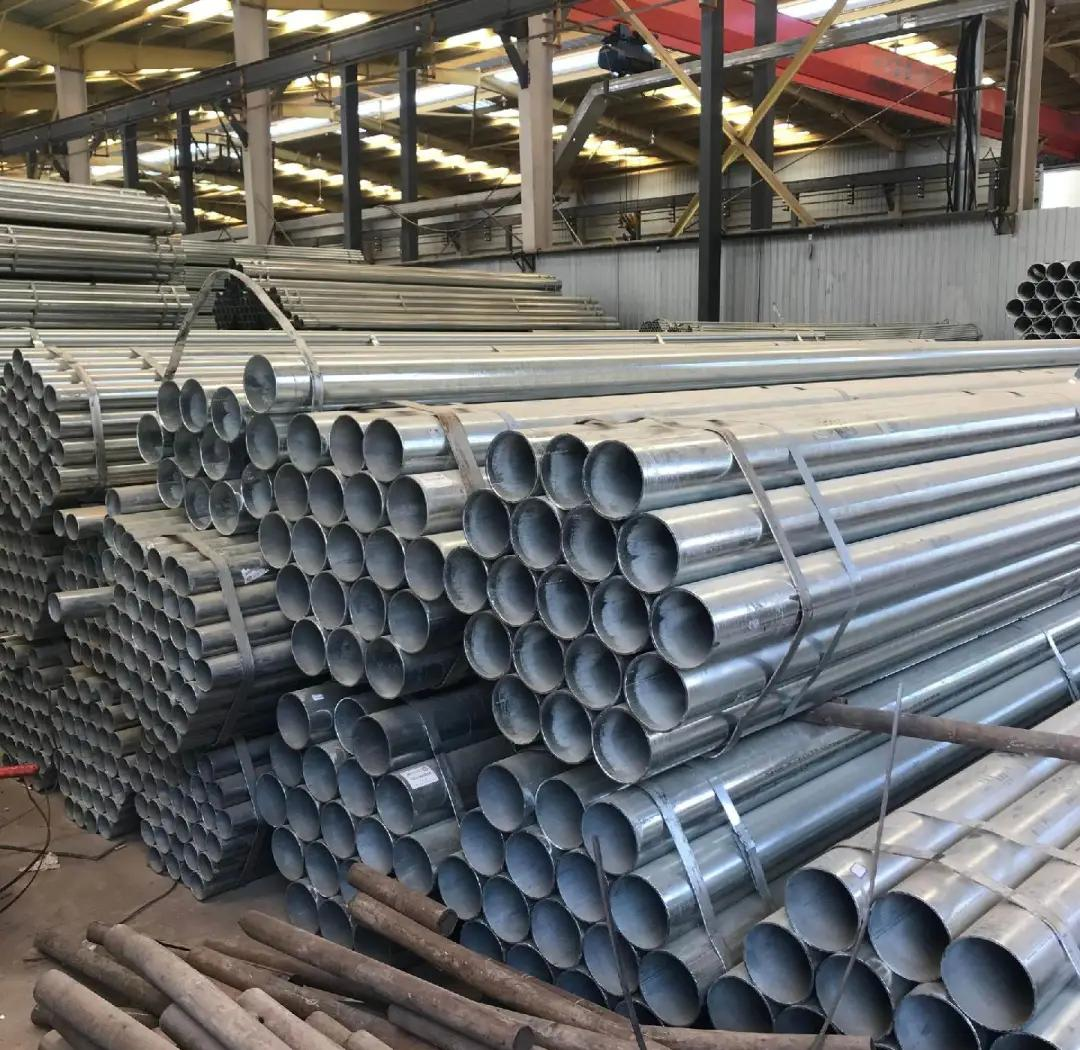
Common materials for galvanized steel pipes
Galvanized steel pipes are primarily made of carbon steel, a material renowned for its high strength and durability. Galvanizing the steel surface enhances its corrosion resistance. The quality of the steel used may vary; some manufacturers choose higher-grade steel to ensure superior performance and a longer service life. Besides carbon steel, other materials can also be used in the production of galvanized pipes.
1. Carbon Structural Steel
This is currently the most widely used type of base material, accounting for over 60% of the market share in sectors such as building water supply/drainage and general steel structures. Common grades include:
Q195: Features excellent ductility (elongation after fracture ≥33%) and strong zinc coating adhesion (cross-cut test rating ≥4B), though it has lower load-bearing capacity; suitable for bending operations and conduit applications.
Q235/Q235B: Yield strength of 235 MPa and carbon equivalent (CE) ≤0.37%; offers excellent weldability and moderate cost. It is the preferred choice for general-purpose applications, widely used in fire-fighting water supply systems, greenhouse supports, construction fencing, and other standard engineering projects.
10#/20# High-Quality Carbon Steel: Primarily used for galvanized seamless steel pipes; features moderate carbon content and balanced mechanical properties, making it suitable for manufacturing mechanical parts and high-pressure fluid pipelines.
2. Low-Alloy High-Strength Steel
Strength is enhanced through the addition of alloying elements such as manganese. Common grades include:
Q345/Q355B (formerly 16Mn): Yield strength reaches 345 MPa (a 47% increase over Q235); tensile strength after galvanizing can reach 630 MPa. It offers superior low-temperature performance and is suitable for applications requiring high load-bearing capacity, such as long-span steel structures, pressure pipelines, and heavy-duty supports.
Special Alloy Steels (e.g., Q390D, 15CrMo): Incorporate micro-alloying elements like Nb, V, and Cr to provide excellent low-temperature toughness or heat and corrosion resistance; specifically designed for demanding conditions such as low-temperature gas transmission lines and high-temperature, high-pressure boiler piping.
3. Special Composite Materials
304/316L Stainless Steel Composite Galvanized Pipe: Features a hot-dip galvanized outer layer (zinc coating thickness ≥80 μm) and a stainless steel inner wall. In highly corrosive environments (such as seawater), its service life is up to three times that of standard galvanized pipe, while costs are 40% lower than pure stainless steel pipe; widely used in food processing, coastal engineering, and other applications requiring high corrosion resistance.
Material Selection for Different Scenarios
| Use Cases | Recommended Materials | Recommended Materials |
| Indoor water supply and drainage, ordinary wiring pipes | Q195/Q235B | Great value for money; meets standard needs. |
| Fire water supply system and steel-structure canopy | Q235B | Good welding performance; complies with national standards. |
| Long-span steel structures, pressure piping | Q345B/Q355B | Higher strength and high load-bearing capacity. |
| High-pressure boilers, precision piping | 20# seamless pipe base material | Uniform microstructure and stable load-bearing capacity. |
| Coastal/Highly Corrosive Environments | 304 stainless steel composite | Corrosion resistance improved threefold. |
Applications of Galvanized Steel Pipes
Galvanized steel pipes are widely used across various industries due to their durability and corrosion resistance. Some common applications include:
Construction Industry: Hot-dip galvanized pipes are frequently used for structural purposes—such as scaffolding, handrails, and support beams—where high strength and durability are required.
Water Supply Systems: Galvanized pipes are commonly used in water supply systems because they can withstand high pressure and resist corrosion caused by water.
Agriculture: In agricultural settings, galvanized pipes are used for irrigation systems, fencing, and livestock housing, as they can withstand harsh outdoor conditions.
Automotive Industry: Electro-galvanized steel pipes are often used in automotive manufacturing (e.g., for exhaust systems and chassis components), where materials need to offer a smooth surface finish and moderate corrosion resistance.
Manufacturing: Galvanized pipes are widely used in various manufacturing processes, including the production of conveyor systems and mechanical components, where strength and wear resistance are critical.
Our company is dedicated to providing high-quality galvanized steel pipes to meet the diverse needs of our customers. Please feel free to contact us if you have any purchasing requirements.
Post time: Sep-16-2026


