

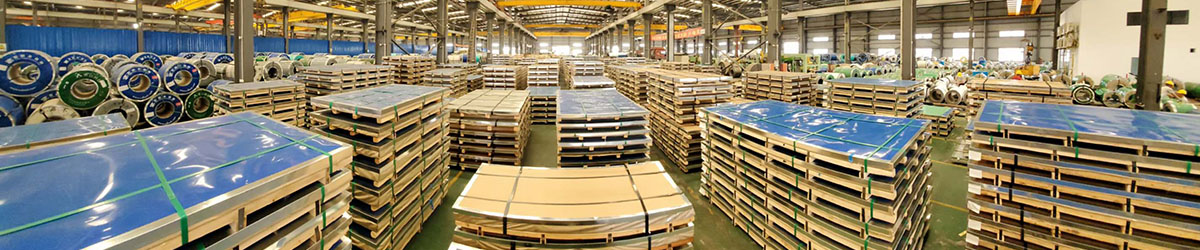
Galvanized steel strip is a corrosion-resistant metal product manufactured from ordinary steel strip through processes such as pickling, galvanizing, and packaging; its key characteristics are excellent corrosion resistance and broad adaptability for further processing.
The galvanizing process involves coating the steel surface with a layer of zinc to prevent corrosion. This process significantly extends the service life of the steel, making it suitable for various industries such as construction, automotive manufacturing, and general manufacturing.
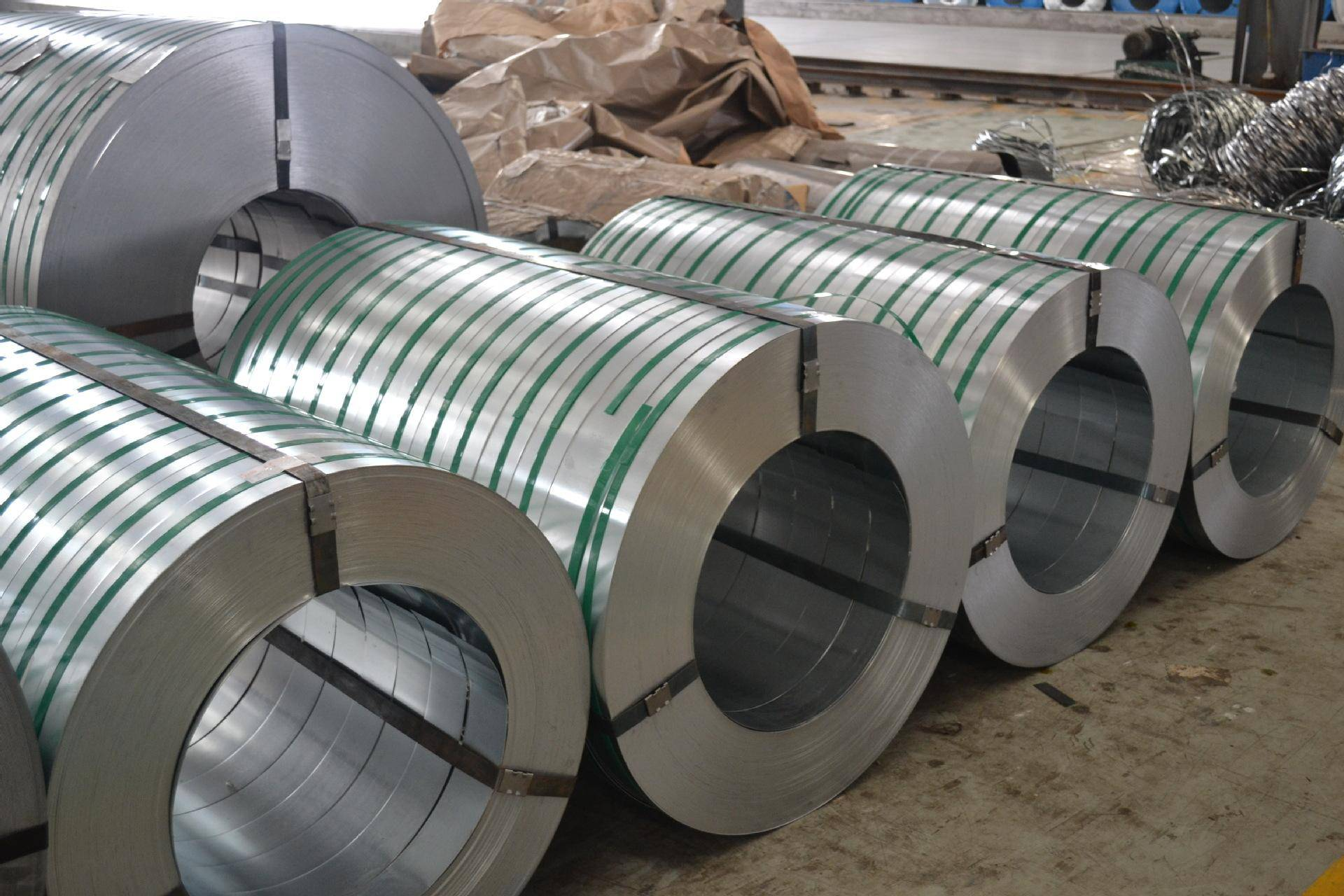
Galvanized steel strips are classified into two categories based on the galvanizing method used:
Hot-dip galvanized steel strip: Produced by immersion in molten zinc; features a thicker zinc coating and strong corrosion resistance, though welding performance may be affected.
Electro-galvanized steel strip: Produced by depositing a zinc coating via electrolysis; features a thinner but more uniform surface, making it suitable for further processing.
The corrosion resistance of galvanized steel strip depends largely on the type of coating used. Below are some commonly used coatings:
- Pure Zinc (Z): This is the most basic form of galvanizing, providing a protective zinc layer to prevent rust.
- Zinc-Iron Alloy (ZF): This coating combines zinc and iron, offering enhanced corrosion resistance and durability, making it suitable for harsher environments.
- Zinc-Aluminum Alloy (ZA): This alloy offers excellent corrosion resistance and is frequently used in harsh environments, such as marine settings.
- Aluminum-Zinc Alloy (AZ): This coating combines aluminum and zinc, providing excellent heat resistance; it is commonly used for roofing and wall panels.
- Aluminum-Silicon Alloy (AS): Known for its high-temperature resistance, this coating is often used in high-temperature applications.
- Zinc-Aluminum-Magnesium Alloy: This advanced coating offers superior corrosion resistance, making it an ideal choice for harsh environments.
Surface Treatment of Galvanized Steel Strip
1. Oiling: Oiling is the most fundamental surface treatment, categorized into three levels: light, medium, and heavy oiling. Light oiling is suitable for simple stamping or rust prevention, while medium or heavy oiling is chosen for applications involving significant stamping deformation. Oiling can be combined with other treatments (such as chromium-free passivation) but is not recommended for use in conjunction with anti-fingerprint treatment.
2. Passivation (including chromium-free passivation): The purpose of passivation is to enhance corrosion resistance. Traditional chromate passivation is gradually being replaced by chromium-free passivation due to the pollution risks associated with hexavalent chromium. Companies like Baosteel are capable of performing phosphating, passivation, oiling, anti-fingerprint coating, and self-lubricating anti-fingerprint coating on electro-galvanized steel; the chemical passivation process used here is chromium-free.
3. Phosphating: Phosphating is primarily used to improve paintability. Galvanized steel undergoes phosphating and a chromium-free sealing treatment to serve as a base for subsequent painting. Phosphating significantly enhances the adhesion of paint and electrophoretic coatings.
4. Anti-fingerprint treatment: Designed for scenarios in the electronics and home appliance industries where parts are frequently handled during processing, this treatment applies an anti-fingerprint coating to the steel surface to prevent fingerprints and sweat stains. There are also self-lubricating anti-fingerprint sheets, used for components such as micro-motors and motor housings that require surface protection to minimize damage.
Specifications of galvanized steel strip
Galvanized steel strips are typically categorized by thickness, width, and length; the primary ranges are 0.1 mm–4.0 mm for thickness and 20 mm–1,500 mm for width. They are usually supplied in coils—typically ranging from 100 m to 1,000 m per coil—and can be slit to custom specifications.
| category | Width range | Typical Specifications | Common uses |
| Narrowband | ≤600mm | 30mm、200~400mm | Pipe manufacturing, hardware accessories, cable armoring, greenhouse frameworks |
| Zhongkuandai | 600~1250mm | 600、800、1000、1220、1250mm | Building roofing and ventilation ducts account for over 70% of market demand. |
| Ultra-wideband | >1500mm | 1500 mm and above | Large containers and automotive steel plates require specialized equipment. |
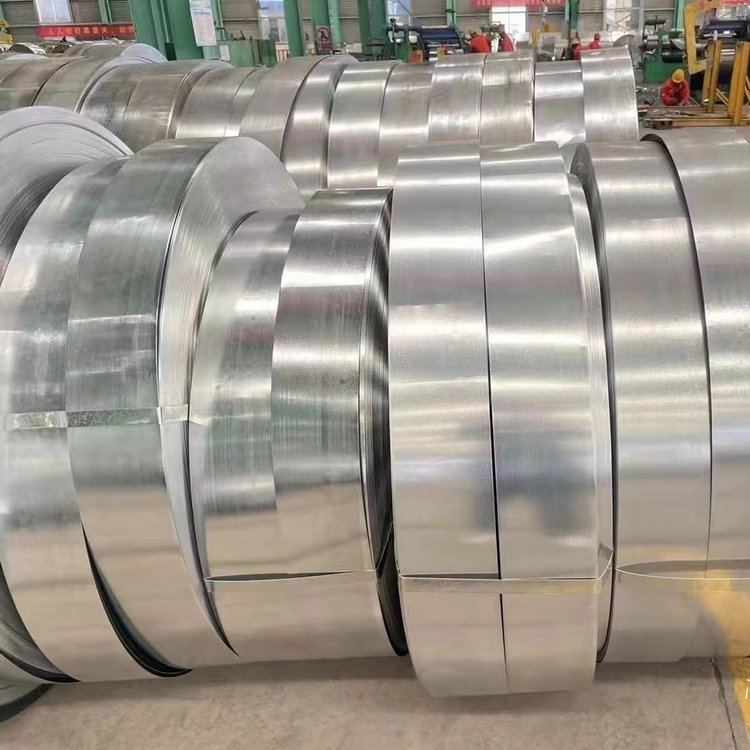
Applications of Galvanized Steel Strip
Galvanized steel strip is a corrosion-resistant metal product manufactured from ordinary steel strip through processes such as pickling, galvanizing, and packaging. Its primary value lies in its excellent corrosion resistance, and it is widely used to produce metal goods that do not undergo further galvanizing after cold forming.
Construction and Steel Structure Sector
Light-gauge steel framing: Used for roofs, ceilings, walls, flashing, canopies, rolling shutter doors, warehouse cladding (interior and exterior), insulation pipe casings, etc.
Steel structural frameworks: Hot-rolled galvanized steel strips are used for light-gauge steel houses and industrial plants; the primary structural skeletons utilize cold-formed galvanized steel sections—including C-sections, Z-sections, floor decking, and steel gutters—typically ranging from 1.5 mm to 3.5 mm in thickness.
Guardrail posts: Highway corrugated beam guardrails predominantly utilize hot-dip galvanizing for corrosion protection.
Steel silos: Over 80% of the steel used to manufacture grain silos consists of hot-rolled galvanized steel strips with a thickness of 1.0–1.4 mm and a width of 495 mm, featuring a galvanizing coating weight exceeding 275 g/m².
Home Appliance Manufacturing
Galvanized steel strips provide reinforcement and protection in home appliances, with specific applications including:
Refrigerator back panels and air conditioner casings
Components for washing machines, shower units, vacuum cleaners, and other appliances
Key materials for parts such as refrigerators, air conditioners, washing machines, microwave ovens, and gas water heaters
Automotive Industry
Passenger car floor panels, various beams and beam reinforcements, supports, brackets, and connecting plates
Components for buses, trucks, trailers, luggage trailers, and refrigerated vehicles; garage doors, windshield wipers, fenders, fuel tanks, water tanks, etc.
Electro-galvanized products are particularly suitable for exterior automotive body panels and other industrial products requiring high surface quality
General Civil and Industrial Use
Household appliances
Base material for industrial stamping
Equipment housings, electrical cabinets, instrument panels, office furniture, etc.
Packaging and Strapping
Galvanized steel strip is an indispensable material in modern manufacturing and construction, offering significant advantages such as high strength, durability, and corrosion resistance.
Understanding the classifications, coating types, surface treatment processes, and specifications of galvanized steel strip enables businesses to make informed decisions and select the material best suited to their specific applications. Whether in construction, automotive, or general manufacturing, choosing galvanized steel strip is a wise move to ensure the long service life and superior performance of a project.
Post time: Sep-21-2026


