

In modern construction and infrastructure, the importance of durable and reliable materials is self-evident. Among them, 3PE steel pipes (also known as three-layer polyethylene anti-corrosion steel pipes) stand out for their superior performance and exceptionally long service life. These pipes, manufactured by industry-leading companies such as Jindalai Steel Group, are meticulously designed to withstand harsh environmental conditions and possess excellent corrosion resistance. The production process of 3PE steel pipes is rigorous and meticulous, ensuring the highest quality standards are met. First, the steel pipes undergo surface treatment, including cleaning and removal of any contaminants that could affect the integrity of the coating. Then comes the anti-corrosion structure: the first layer is epoxy powder (FBE): with a thickness greater than 100um, it has excellent adhesion and corrosion resistance, effectively preventing external factors such as moisture and gases from eroding the steel pipe surface. The second layer is adhesive (AD): a copolymer adhesive with branched functional groups, between 170-250um thick, which connects the epoxy powder layer and the polyethylene layer, ensuring a tight bond between the three layers. The third layer, polyethylene (PE), is 1.8-3.7 mm thick and possesses excellent corrosion resistance, water vapor permeability resistance, and mechanical properties, protecting the steel pipe from environmental influences. This multi-layer coating not only improves pipe durability but also significantly extends its service life. 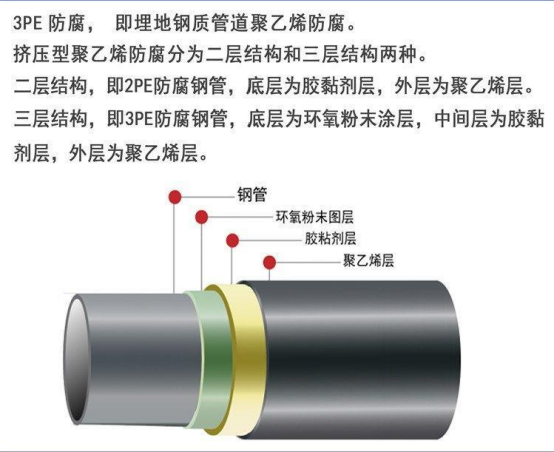 3PE steel pipes are widely used and are the preferred choice for many industries. These pipes are commonly used in oil and gas transportation, water supply systems, and wastewater treatment. Their robust structure and excellent corrosion resistance make them ideal for underground installations, where ordinary steel pipes are prone to rapid corrosion in humid and soil environments. Furthermore, 3PE corrosion-resistant steel pipes are increasingly used in renewable energy projects, such as geothermal and wind power generation, where reliability and service life are critical. Surface treatment is crucial to the performance of 3PE steel pipes. Initial surface treatment is a key step to ensure effective adhesion between the epoxy primer and the steel substrate. This is followed by the application of a three-layer polyethylene coating, the application process of which is strictly controlled to ensure uniform thickness and coverage. The final surface treatment includes coating curing to achieve optimal hardness and resistance to environmental factors. This comprehensive surface treatment process not only enhances the aesthetics of the pipes but also strengthens their corrosion resistance and resistance to mechanical abrasion. 3PE steel pipes are designed with maximum strength and durability in mind. The inner steel layer provides the necessary structural integrity, while the three-layer polyethylene coating effectively resists corrosive substances. This combination makes the pipes not only strong but also lightweight, facilitating handling and installation. Furthermore, the flexibility of the polyethylene layers allows for a degree of deformation, reducing the risk of cracking or breakage under stress. In conclusion, 3PE steel pipes, especially TPEP anti-corrosion steel pipes, represent a significant advancement in piping technology. With their robust manufacturing processes, wide range of applications, and superior surface treatment technology, they are ideal for industries seeking reliable and durable solutions. Jindalai Steel Group continues to lead the production of these innovative steel pipes, ensuring they meet the highest quality and performance standards. As infrastructure demands grow, the importance of such advanced materials will only increase, solidifying the key position of 3PE steel pipes in modern engineering and construction.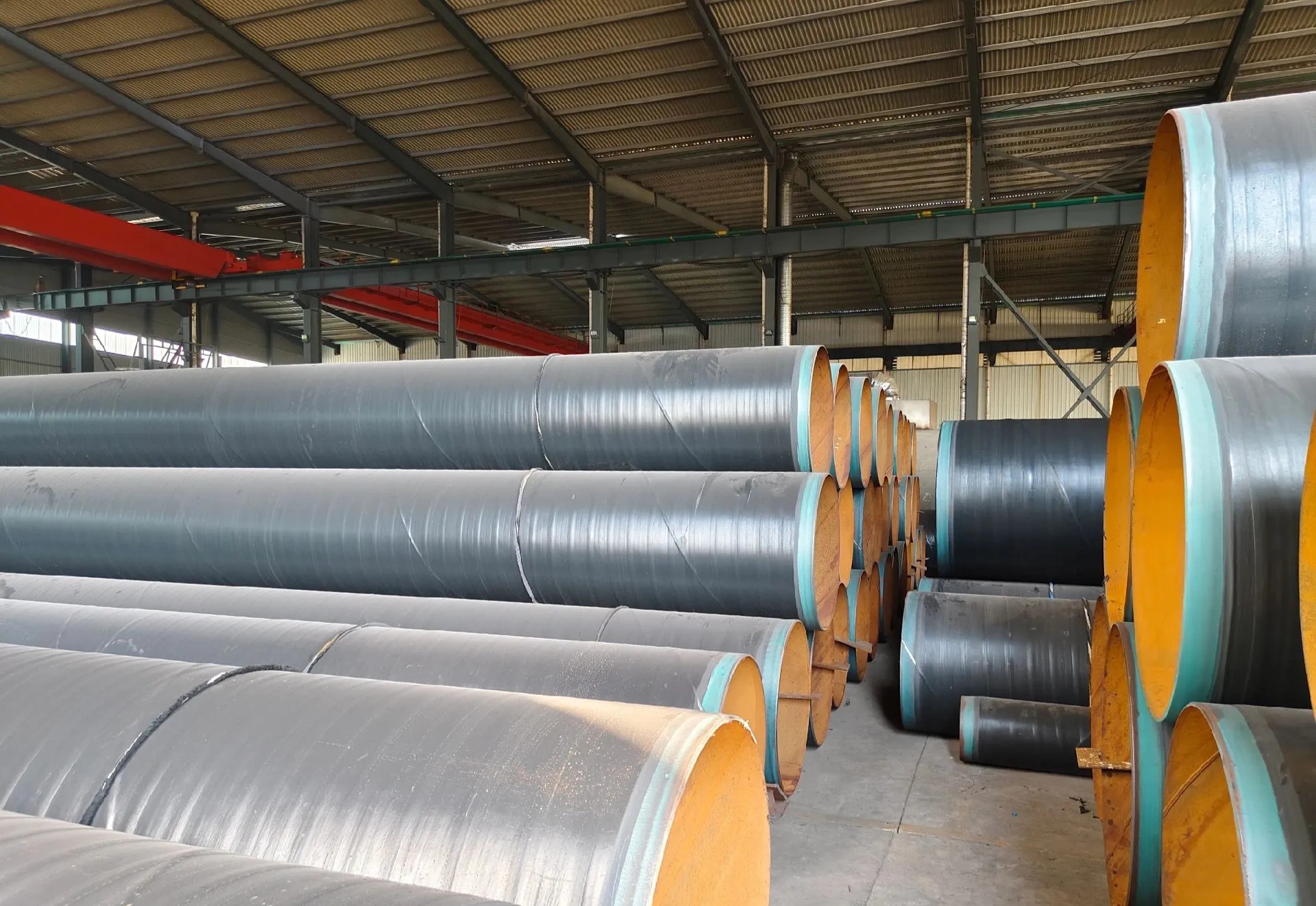
Post time: May-08-2026


