

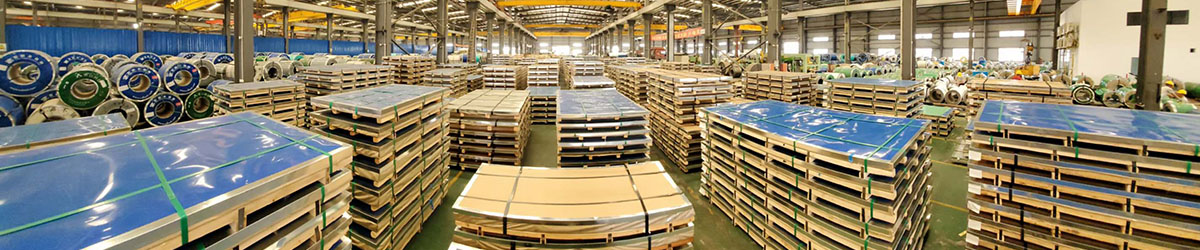
Aluminum Plate: Grades, Dimensions, and Applications Aluminum plate refers to a rectangular sheet material made from aluminum or aluminum alloys through plastic processing techniques such as rolling and extrusion. As one of the most widely used non-ferrous metal materials in modern industry, aluminum plate plays an irreplaceable role in aerospace, transportation, architectural decoration, electronics, and packaging due to its excellent properties such as lightweight, high strength, corrosion resistance, ease of processing, and recyclability.
Aluminum plates are classified into alloy series based on their main alloying elements. Each series has a unique balance of mechanical properties, machinability, weldability, and corrosion resistance.
1-series aluminum plate: Aluminum content is at least 99.0%. Its main characteristics are excellent corrosion resistance, high thermal and electrical conductivity, and good formability.
Primarily used in products with low strength requirements, such as automotive heat insulation panels, billboards, building exterior decoration, wall decoration, electrical lighting, heat exchangers, kitchenware, conductive materials, chemical equipment, electronic components, inland waterway vessel equipment, various containers (wine tanks, pressure tanks, tea boilers, etc.), instruments and meters, signs (equipment signs, road signs, vehicle license plates, etc.), hardware cookware, and machine parts with low stress.
Common pure aluminum grades: 1050, 1050A, 1060
2-series aluminum plates: Copper (2-6%) is the main alloying element, providing high strength (tensile strength can reach 470 MPa after heat treatment), but corrosion resistance and weldability are somewhat reduced.
Mainly used in aircraft structures (such as skin), aerospace, weaponry, engines, pistons, automotive bodies, ship hulls, and load-bearing components.
Commonly used grades of aluminum-copper alloys: 2024, 2A12
3-series aluminum plates: Manganese (1-1.5%) imparts moderate strength to the alloy (tensile strength approximately 110-200 MPa) while maintaining excellent machinability and corrosion resistance.
Mainly used in industrial pure aluminum plates and in areas requiring higher hardness, commonly found in kitchenware, food and chemical storage and transportation, heat sinks, and household appliances (such as air conditioners, refrigerators, washing machines, etc.).
Commonly used grades of aluminum-manganese alloys: 3003, 3004
4-series aluminum plates: Aluminum alloys with silicon as the main alloying element, mostly not heat-treatable. Silicon content is typically between 4.5-6.0%. Low melting point, good melt flowability, easy feeding, good corrosion resistance; good wear resistance and heat resistance.
Mainly used in welding materials, etc.
Commonly Used Grades: 4343
5 Series Aluminum Plate: Magnesium (3-5%) imparts excellent corrosion resistance to the alloy, especially against seawater corrosion, as well as medium to high strength (tensile strength of 5083 is approximately 270-350 MPa). These alloys are not heat-treatable and possess excellent weldability and low-temperature toughness.
They are widely used in building decoration, pressure vessels, ship structures and offshore facilities, aircraft fuel tanks, automobile fuel tanks, automobile air tanks, containers, etc.
Commonly Used Grades of Aluminum-Magnesium Alloys: 5052, 5083
6 Series Aluminum Plate: These heat-treatable alloys combine strength, good corrosion resistance, excellent weldability, and excellent machinability.
Mainly used in construction, shipbuilding, rail vehicles, electronics, electrical and electronic products, durable consumer goods, etc.
Commonly Used Grades of Aluminum-Magnesium-Silicon Alloys: 6061, 6063, 6082
7 Series Aluminum Plate: A series of ultra-hard aluminum alloys, with zinc, magnesium, and copper as the main alloying elements. The combination of zinc (5-7%) with magnesium and copper gives aluminum alloys the highest strength, comparable to many steels. Heat treatment yields excellent results; wrought aluminum alloy sheets exhibit superior strength and good plasticity after solution treatment, possessing excellent mechanical properties, wear resistance, and fatigue resistance.
It is the preferred material for aerospace equipment and is also widely used in various machinery, mold making, and other processing and manufacturing fields.
Common grade of aluminum-zinc alloy: 7075.
Its applications cover ship hulls, aircraft wings, chemical storage tanks, and robot frames. By selecting appropriate alloys and thicknesses, engineers can obtain cost-effective, durable, and lightweight solutions. As industries increasingly pursue energy-saving and corrosion-resistant designs, the application range of aluminum sheets will continue to expand, consolidating its position as a modern engineering material.
If you need to purchase aluminum sheet products, please click to contact us for consultation. Jindalai Steel Group Co., Ltd. will provide you with the most professional answers.
Post time: May-15-2026


