

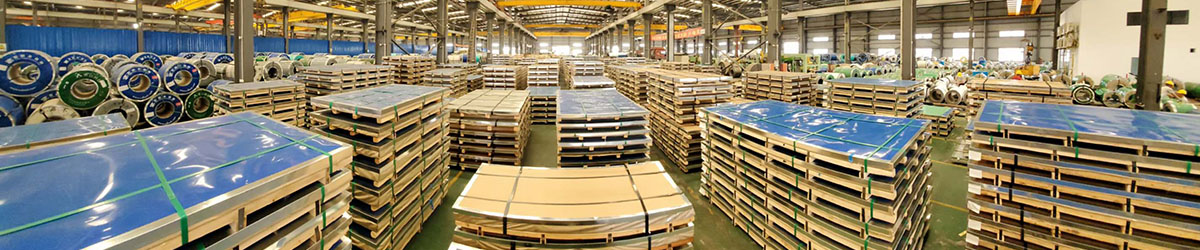
In the fields of architectural decoration and industrial manufacturing, colored aluminum coils are becoming a preferred alternative to traditional materials due to their excellent performance and diverse forms. This type of coil, based on aluminum alloy and treated with surface coloring and coating, retains the inherent advantages of aluminum—lightweight and corrosion-resistant—while also being endowed with rich aesthetics and functionality through processing, making it widely used in various industries.
The base materials for colored aluminum coils are mainly 1-series, 3-series, and 5-series aluminum alloys. The differences in the characteristics of different series of base materials directly affect the applicable scenarios:
1-series pure aluminum (commonly 1060): Simple production process, lower price, but the material is relatively soft, suitable for general scenarios with low strength requirements (such as pipe insulation, billboards), offering the highest cost-effectiveness.
3-series aluminum-manganese alloys (commonly 3003/3004): 3003 contains 1.0-1.5% manganese, providing good rust resistance. Its hardness and tensile strength are superior to 1-series alloys, making it the most commonly used base material. 3004 contains an additional 0.8-1.3% magnesium (also known as aluminum-magnesium-manganese alloy), resulting in higher strength and suitability for building roofs with high structural strength requirements. Its price is slightly higher than 3003.
5-series aluminum-magnesium alloys (commonly 5052): Containing 3-5% magnesium, these alloys have low density, high tensile strength, and are lighter. They are relatively more expensive and are occasionally used in high-end color-coated aluminum coil production, originally primarily used in the aerospace field.
Coating is the “core soul” of color-coated aluminum coils. Different coating structures and processes determine the product’s color effect, weather resistance, and functional characteristics. Currently, the mainstream coating process is “two coatings and two bakings,” with some high-end products using “three coatings and three bakings.” The specific structure consists of three layers from the inside out: Pre-treatment layer: “Underlying protective barrier.” A dense oxide film, approximately 5-10 nm thick, is formed on the aluminum substrate surface through chromating or chromium-free passivation. This enhances the adhesion between the substrate and the coating, prevents coating peeling, and improves overall corrosion resistance, laying the foundation for subsequent coatings.
Primer Layer: “Intermediate Connector and Protective Layer.” Epoxy or polyester resin is used as the primer, approximately 5-10 μm thick. Its main function is to further enhance adhesion and block external moisture and oxygen from contacting the substrate, improving corrosion resistance. The primer color can be adjusted according to the topcoat requirements to ensure a uniform and vibrant final color.
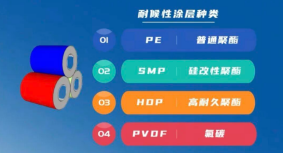
Topcoat Layer: “Aesthetic and Functional Core Layer.” Different types of topcoats are selected according to application requirements, approximately 15-25 μm thick. Common topcoat types include: Fluorocarbon Paint (PVDF): “The King of Outdoor Durability.” Made with polyvinylidene fluoride resin, it boasts excellent UV resistance and anti-aging properties. Within a temperature range of -40℃ to 150℃, the color is resistant to fading and the coating is not prone to cracking. It also has strong self-cleaning properties; rainwater can easily remove surface dust, making it suitable for long-term exposure applications such as building exteriors and outdoor curtain walls. The coating lifespan can reach over 20 years.
Polyester paint (PE): “A cost-effective choice.” The cost is 40%-50% lower than fluorocarbon paint. While its anti-aging performance is not as good as fluorocarbon paint, it can still guarantee a service life of 10-15 years in non-extreme climate areas (such as Central and Southern China). It also offers a rich variety of colors, including custom matte, high-gloss, and metallic finishes, suitable for factory exteriors, appliance casings, and interior ceilings.
Silicone-modified polyester paint (SMP): “A well-balanced performance option.” Combining the cost-effectiveness of polyester paint with the weather resistance of fluorocarbon paint, it offers superior UV resistance compared to ordinary polyester paint, boasts a lifespan of 12-18 years, and is less expensive than fluorocarbon paint. This makes it suitable for projects with certain weather resistance requirements but limited budgets, such as eaves of commercial complexes and gas station canopies.
With continuous advancements in materials technology, color-coated aluminum coils will develop towards greater environmental friendliness, more functionality, and greater personalization. On one hand, environmentally friendly coatings (such as chromium-free passivation coatings and water-based paints) will gradually replace traditional coatings, reducing environmental impact. On the other hand, color-coated aluminum coils with special functions, such as antibacterial, fire-retardant, and self-healing coatings, will continue to emerge, meeting the needs of more specialized scenarios. Simultaneously, personalized customization services will become more comprehensive, allowing for customized colors and textures based on user requirements, further expanding the application scope of color-coated aluminum coils.
Post time: May-29-2026


