

In the field of civil engineering—particularly in tunneling, mining, and slope engineering—the importance of anchor bolts cannot be overstated. These critical components serve as the cornerstone of structural integrity, ensuring the stability and safety of various structures under diverse conditions.
What is an anchor bolt?
Anchor bolts are robust fasteners used to attach structures to concrete or masonry structures. They are designed to provide stability and support, especially in environments where external forces such as wind, earthquakes, or soil movement could compromise structural integrity. In tunnel, mining, and slope engineering, anchor bolts play a crucial role in securing walls, roofs, and slopes, preventing collapses and ensuring the safety of workers and equipment.
Common Types of Rock Bolts
1. Mortar/Cement-Grouted Anchors: These anchors are embedded in cementitious materials, forming a strong bond with the surrounding concrete. They are ideal for applications requiring high load-bearing capacity.
2. Full-Length Grouted Anchors: Similar to cement-grouted anchors, these are fully grouted along their entire length, enhancing load distribution and shear strength.
3. Mechanical Anchors / End-Anchored Bolts: These anchors are mechanically fixed to the base material. They are typically used in applications requiring immediate load-bearing capacity.
4. Bonded Anchors: These anchors are installed using an adhesive to form a strong bond with the base material. They are particularly suitable for situations where traditional mechanical anchoring methods are not feasible.
5. Soil Anchors: Designed specifically for soil environments, these anchors are commonly used in slope stabilization projects. They help resist lateral forces and prevent soil movement.
6. Rock Anchors: Designed for anchoring into rock strata, these provide stability for mining and tunneling operations.
7. Mining Anchors: Engineered to meet the unique challenges of mining environments, these anchors withstand extreme conditions and provide reliable support.
Commonly used materials for rock bolts
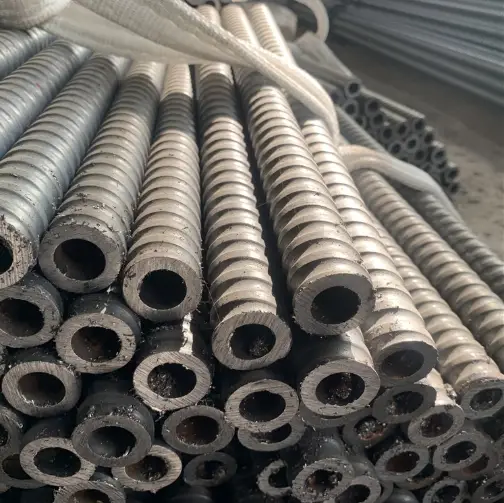
Depending on the application scenario and type, the materials commonly used for rock bolts fall into the following categories:
1. Ordinary Low-Carbon Steel
Low-carbon steel is the most basic material for rock bolts; common grades include Q235 and Q195. While characterized by low cost and good workability, these steels have relatively low strength and are generally suitable for low-stress, shallow-depth roadways or temporary support applications.
2. Low-Alloy High-Strength Steel
Low-alloy high-strength steel is currently the most widely used material for rock bolts in engineering projects, adhering to the MSGLW-335/400/500 strength grade standards. Notably, 20MnSi is a typical material used for left-hand threaded rock bolts.
3. Alloy Steel
Alloy steels are commonly used for specialized conditions involving high stress or high corrosivity; mainstream grades include 35CrMo and 40CrMo. After undergoing quenching and tempering, the strength and corrosion resistance of the rock bolts are significantly enhanced. For instance, in salt spray tests simulating high-humidity underground environments, 40CrMo alloy steel exhibits a corrosion rate approximately 60% lower than that of ordinary carbon steel, resulting in a significantly extended service life.
4. Special Composite Materials
Composite materials—exemplified by glass fiber reinforced plastic (FRP)—represent a new class of rock bolt materials manufactured in accordance with the MT/T 1061-2008 standard. They offer distinct advantages: a tensile strength of up to 800 MPa and a weight only one-quarter that of steel rock bolts. Additionally, they possess corrosion-resistant, explosion-proof, and anti-static properties, making them highly suitable for specialized environments such as coal mine roadways and corrosive geological settings.
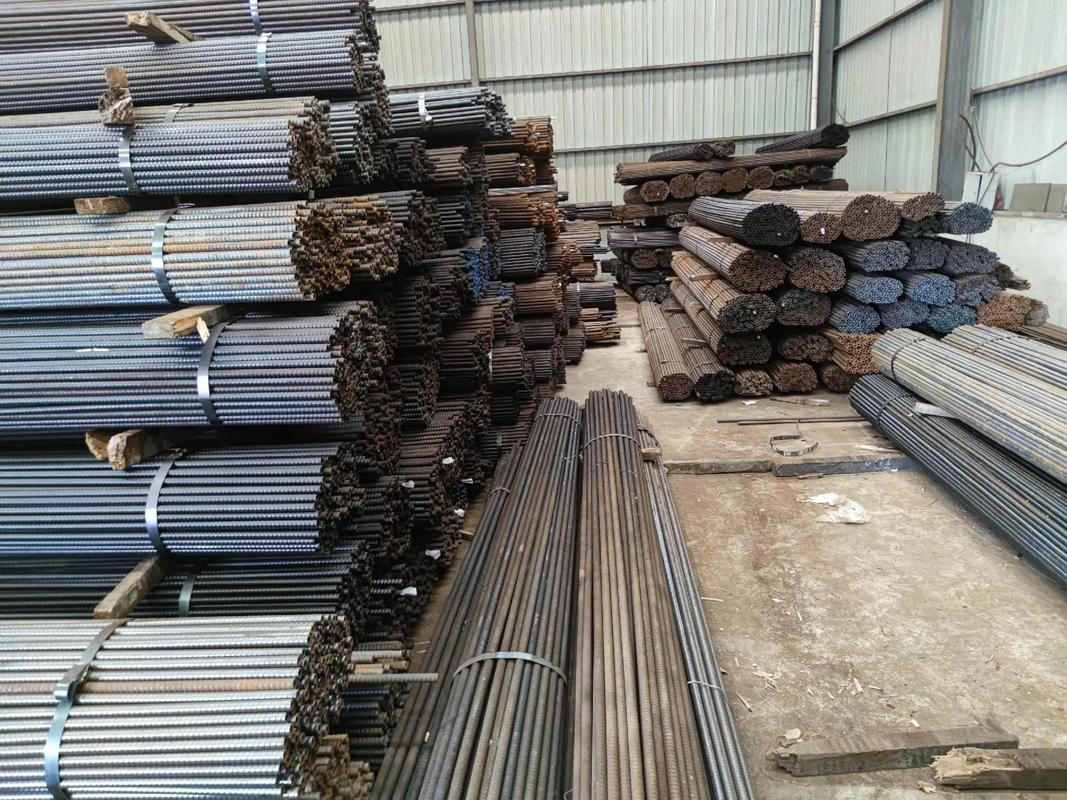
The Difference Between Hollow and Solid Rock Bolts
Differences in Structure and Manufacturing Process
| Comparison dimensions | Hollow anchor rod | Solid rock bolt |
| Rod body structure | Uses a hollow tube as the rod body, featuring a full-length internal grouting channel. | Features a solid steel rod body with no internal grouting channel. |
| Grouting method | Grouting can be performed directly through the hollow channel of the rod, integrating anchoring and grouting without the need for a separate grouting pipe. | Grouting pipes must be installed separately to complete the grouting process, making the procedure more complex. |
| Anchoring effect | It offers excellent grouting uniformity and enables full-length anchoring; under identical geological conditions, the anchorage force is 15%–25% higher than that of solid rock bolts. | Typically, only end anchorage can be achieved, and grouting uniformity is relatively poor. |
| Processing for length extension | The entire outer surface features standard large-pitch threads, facilitating on-site cutting and extension. | Extending the length requires additional welding or threading, making the process more complex. |
Differences in Application Scenarios
Hollow rock bolts: Better suited for complex geological conditions—such as weak or fractured surrounding rock, strata with extensive fracturing, or water-rich formations. They allow for grouting to fill rock fissures and improve rock mass strength, creating a unified “bolt-grout-rock” anchoring system. They are widely used in applications requiring enhanced anchoring force, such as tunneling and slope stabilization.
Solid rock bolts: Primarily used in hard, intact rock or dense strata. They mainly provide mechanical anchoring force and are frequently employed in prestressed anchoring applications; they also offer a relatively lower cost.
Geological formations suitable for self-drilling rock bolts
Soft soil: These anchors are highly effective in soft and cohesive soils where traditional drilling methods might be difficult to implement.
Weathered rock strata: In partially weathered rock, self-drilling anchors provide necessary support without requiring extensive pre-drilling.
Loose gravel or sand: These anchors can also be used in loose, granular soils to provide stability for slope stabilization projects.
Fault zones: Self-drilling anchors can penetrate directly through fractured zones, anchoring into deeper, stable rock masses to form a cohesive, stable structure that enhances the rock’s shear strength and resistance to deformation; additionally, the grouting process seals groundwater pathways, thereby mitigating the impact of water-related issues on the anchored structure.
Rock bolts are indispensable components in tunneling, mining, and slope engineering, providing essential support and stability to various structures. We offer a comprehensive range of rock bolt products—including grouted, mechanical, and bonded bolts—designed to meet the diverse needs of the construction industry. For engineers and construction professionals, understanding the different types, materials, and application scenarios of rock bolts is crucial for ensuring project safety and durability. Whether working in soft soil foundations, weathered rock strata, or complex mining environments, selecting the right rock bolt is vital to maintaining structural integrity and safety.
Post time: Sep-28-2026


