

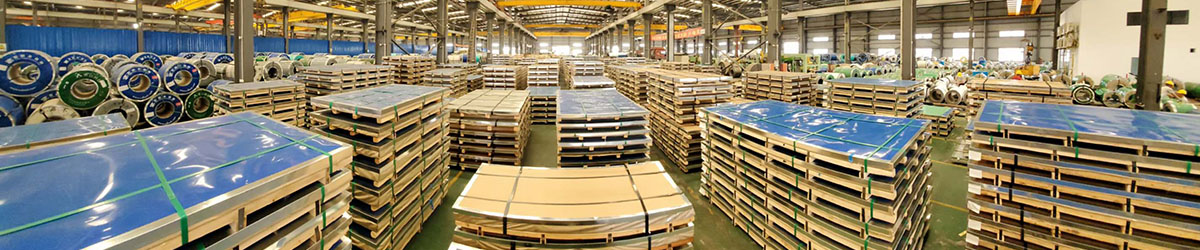
They can be understood as long strips of steel with specific cross-sectional shapes, made from carbon steel (mainly containing iron and carbon) and formed through processes such as rolling and extrusion. These profiles come in various shapes and sizes, each designed for a specific application. The most common types include angle steel, H-beams, I-beams, and channel steel.
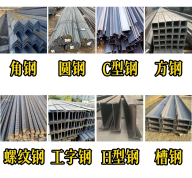
H-Beams and I-Beams
With an “H” or “I” shaped cross-section, they are the main load-bearing structures in buildings and bridges. H-beams offer superior mechanical properties and are more economical.
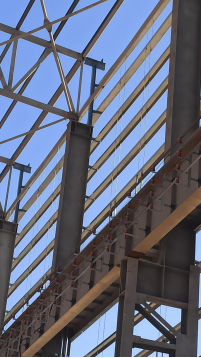
H-beams have excellent mechanical properties, strong bending and torsional resistance, uniform stress distribution, and good stability. They are widely used in beams and columns of high-rise buildings, load-bearing components of industrial plants, main beams of long-span bridges, steel structure workshops, and various heavy steel structure projects. They are also commonly used as steel piles and support structures.
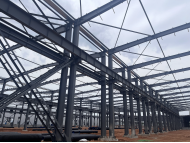
I-beams have narrow flanges and their cross-sections mainly bear unidirectional bending moments, resulting in relatively weak torsional resistance. They are mostly used for beams and secondary beams in small and medium-sized buildings, as well as in construction supports, machinery frames, simple load-bearing structures, and temporary supports, where vertical unidirectional forces are the primary load-bearing conditions.
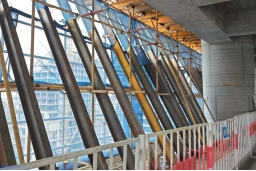
Channel Steel
Channel steel has a concave cross-section, possessing good bending resistance and structural rigidity. It is also easy to splice, weld, and install, making it widely used in building construction, machinery manufacturing, and various support structures. It is commonly used in wall columns, roof purlins, curtain wall joists, door and window frames, and various load-bearing supports in industrial plants and civil buildings. It can also serve as internal skeletal components for vehicles and ships. Furthermore, it is suitable for auxiliary structures such as cable trays, equipment bases, stair treads, and temporary construction supports, and is particularly common in small to medium-sized steel structures and relatively simple load-bearing support systems.
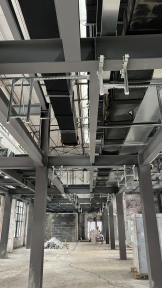
Angle Steel
Angle steel features stable cross-sections, convenient connections, and ease of welding and assembly. It is cost-effective and highly practical, and is widely used in various steel structure projects. It is often used to make trusses, supports, braces, columns and enclosure frames for building structures. It is also suitable for factories, bridges, power transmission towers, billboard frames and various equipment bases. At the same time, it is also very common in small and medium-sized components and auxiliary structures such as door and window frames, stair handrails, guardrails, and pipe supports. It is an economical steel profile with wide applications in industrial and civil buildings, machinery manufacturing, power and transportation.
Jindalai Steel Group Co., Ltd. understands the crucial importance of quality control in carbon steel profile production. Every batch of products undergoes rigorous testing to ensure compliance with industry standards and customer specifications. We also support product customization; please feel free to contact us at any time.
Post time: Apr-10-2026


